Egon Erwin Kisch
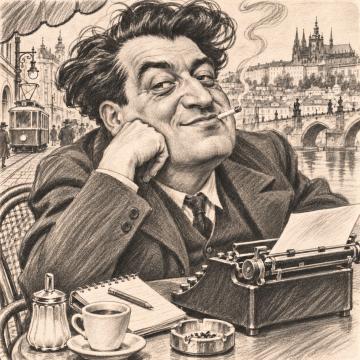
Egon Erwin Kisch (1885–1948) was a Prague-born journalist and writer who wrote in German. Born into a Jewish family, he began his career as a local reporter for the Prague newspaper Bohemia. During the First World War he served in the Austro-Hungarian army on the Serbian front and later worked for the wartime press service in Vienna. He joined the communist movement in 1918. In the 1920s he worked in Berlin, which became the base for his reporting trips abroad.
The collection Der rasende Reporter (1924), known in Croatian as Jureći izvjestitelj, established his reputation and gave him the nickname “the roving reporter”. His journalism combined first-hand observation and interviews with witnesses with literary storytelling. He took an interest in people and places that rarely received attention in the press. In Paradies Amerika (1930) he wrote about the United States, and in China geheim (1933), published in Croatian as Tajna Kina, he wrote about China. His work influenced the development of literary reportage and had an impact on Croatian journalism.
After the Reichstag fire in 1933, the Nazi authorities arrested him and deported him to Prague. He later reported on the Spanish Civil War and spent part of his exile in Mexico. There he took part in German anti-fascist literary circles and wrote about the country in Entdeckungen in Mexiko (1945). He returned to Prague in 1946 and died there two years later.
Titel im Angebot

Egon E. Kisch ima čast da prikaže Raj Ameriku
Reportagen Egon Erwin Kischs über Amerika Ende der 1920er-Jahre, die den Mythos vom amerikanischen Paradies anhand von Kapitalismus, sozialer Ungleichheit und Alltagsleben kritisch hinterfragen.
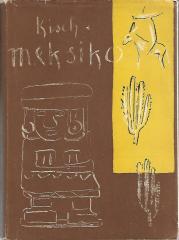
Meksiko
Das Werk eines bekannten Journalisten und Schriftstellers wurde 1937 nach seinem Aufenthalt in Mexiko veröffentlicht, wo er die politischen, sozialen und kulturellen Bedingungen in einem Land untersuchte, das nach der mexikanischen Revolution bedeutende V
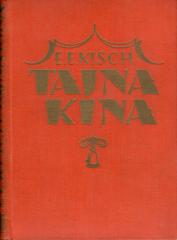
Tajna Kina
Reisereportagen Egon Erwin Kischs über China zu Beginn der 1930er-Jahre, seine sozialen Gegensätze, politischen Konflikte, das Alltagsleben der Bevölkerung und den Einfluss ausländischer Mächte.