Put k Swannu

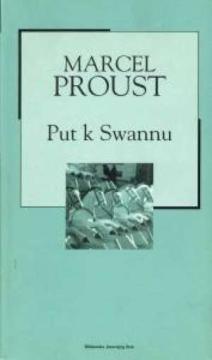
Put k Swannu

Marcel Proust

The Journey to Swann is the first part of the monumental cycle "In Search of Lost Time" (À la recherche du temps perdu), published in 1913. The novel is structured in three parts and deals with the themes of memory, time, and love.

The Journey to Swann is the first part of the monumental cycle "In Search of Lost Time" (À la recherche du temps perdu), published in 1913. The novel is structured in three parts and deals with the themes of memory, time and love.

In the first part, the narrator recalls his childhood in Combray, emphasizing the importance of family routines, feelings and early impressions. The famous motif of the "madeleine" (a cookie dipped in tea) triggers an avalanche of memories that connect the past and the present, indicating the power of unconscious memory.

The central part of the novel is dedicated to the love story of Swann, a member of Parisian high society, and the young woman Odette de Crécy. Despite the fact that Odette is not his ideal of beauty, Swann falls obsessively in love with her. Their relationship, full of jealousy and insecurity, depicts love as an illusion and a form of personal suffering.

In the third part, the narrator describes his own awakening of feelings for Gilberte, the daughter of Swann and Odette, which imitates and announces the more complex love stories that will develop in the rest of the cycle.

"The Way to Swann" explores how time and memory shape our perception of life, and Proust's style is characterized by long sentences, detailed descriptions and introspective analysis. The work is one of the most important achievements of world literature of the 20th century.

In addition to "Combray", two other parts were published in this book: "One Swann Love" and "Place Names: The Name".

Titel des Originals
Du cote de chez Swann
Übersetzung
Zlatko Crnković
Editor
Zlatko Crnković
Maße
21 x 13 cm
Seitenzahl
413
Verlag
Jutarnji list, Zagreb, 2004.
 
Latein Schrift. Fester Einband mit Schutzumschlag.
Sprache: Kroatisch.
ISBN
9-53-716015-7

Weitere Exemplare sind verfügbar

Kopiennummer 1

Zustand:Ungebraucht
Zum Warenkorb hinzugefügt!

Kopiennummer 2

Zustand:Gebraucht, in ausgezeichnetem Zustand
Zum Warenkorb hinzugefügt!

Kopiennummer 3

Zustand:Gebraucht, in ausgezeichnetem Zustand
Zum Warenkorb hinzugefügt!

Kopiennummer 4

Zustand:Gebraucht, in ausgezeichnetem Zustand
Zum Warenkorb hinzugefügt!

Kopiennummer 5

Zustand:Gebraucht, in ausgezeichnetem Zustand
Zum Warenkorb hinzugefügt!

Kopiennummer 6

Zustand:Gebraucht, in ausgezeichnetem Zustand
Zum Warenkorb hinzugefügt!
 

Interessieren Sie sich für ein anderes Buch? Sie können das Angebot über unsere Suchmaschine suchen und finden oder Bücher nach Kategorien durchsuchen.

Diese Titel könnten Sie auch interessieren

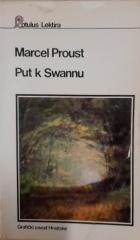
Put k Swannu

Put k Swannu

Marcel Proust
Grafički zavod Hrvatske (GZH), 1981.
Kroatisch. Latein Schrift. Taschenbuch.
9,98 - 9,99
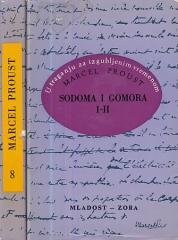
Sodoma i Gomora I-II

Sodoma i Gomora I-II

Marcel Proust
Zora, 1972.
Kroatisch. Latein Schrift. Fester Einband mit Schutzumschlag.
Das Buch besteht aus zwei Bänden
11,26
Operater

Operater

B. D. Benedict

The novel by Serbian-Canadian author Božidar D. Benedict (film director and author of 36 bestsellers) is a pioneering example of the "religious thriller" – a genre invented by Benedict, where instead of spies, invisible agents of God and Satan fight for h

Stari grad, 2000.
Kroatisch. Latein Schrift. Hardcover.
9,22 - 9,26
Brdo

Brdo

Ivica Prtenjača

It is a deeply disturbing text, full of emotions and traumatic experiences of a collapsed, imploded urban individual crying out for the meaning of life.

VBZ, 2014.
Kroatisch. Latein Schrift. Taschenbuch.
7,82
Ulazeći u Varcar

Ulazeći u Varcar

Ivan Lovrenović

The hybrid book – a novel, poem and essay in one – is a dedication to his native Varcar, a small village in central Bosnia, where the author's roots intertwine with the history, myth and chaos of the 20th century.

Fraktura, 2016.
Kroatisch. Latein Schrift. Fester Einband mit Schutzumschlag.
14,42
Aurorin poticaj

Aurorin poticaj

Erich Hackl

The work is based on a true event that occurred in Spain in 1933: Aurora Rodriguez killed her daughter Hildegart, a famous fighter for women's emancipation and a cult figure on the political scene of the time.

Mladost, 1990.
Kroatisch. Latein Schrift. Fester Einband mit Schutzumschlag.
4,98