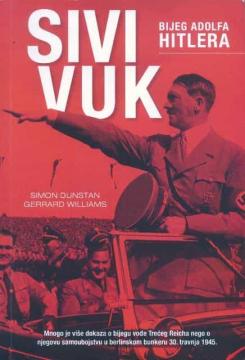
Sivi vuk: Bijeg Adolfa Hitlera

Sivi vuk: Bijeg Adolfa Hitlera

Simon Dunstan, Gerrard Williams

In the book, two British publicists reject the official version of the Fuhrer's death and present a shocking theory, for which there is ample evidence... Is it possible that the leader of the Third Reich really escaped justice?

In this book, two British publicists reject the official version of the Fuhrer's death, according to which he and Eva Braun committed suicide in a bunker in Berlin on April 30, 1945. Instead, they point to ample evidence, which they collected over five years, that the couple fled Berlin at the end of World War II to start life anew in a Nazi-controlled enclave in fascist Argentina. Hitler lived comfortably and happily until 1962 and even had offspring.

In an underground bunker in Berlin on April 30, 1945, before the invasion of the victorious Soviet Red Army, Hitler's loyal associates killed their volunteer doubles - a non-commissioned officer of the Wehrmacht and a "third class" actress!

The book, which immediately became a bestseller in Great Britain, is named after the pseudonym of the leader of the Reich - the Gray Wolf - which was given to him by his closest associate - Martin Bormann, back in 1943, while he was working on the evacuation plan. . Bormann devised a plan to "dislocate" the top Nazi leadership from Germany to South America, in case the fortunes of war turned against Berlin.

While filming a series of documentaries in Argentina on the occasion of the anniversary of the Falklands War, Gerrard Williams came across an interesting story about Adolf Hitler. There he met many people who were sure that Hitler had escaped from Germany and was living in their country. He decided to team up with his old friend, writer, videographer and photographer specializing in military history - Simon Dunstan. What they discovered shocked them both. There is much more evidence of the Reich leader's escape than of his death.

Titel des Originals
Grey Wolf: The Escape of Adolf Hitler
Übersetzung
Tamara Novak
Editor
Enes Begulić
Maße
21 x 14 cm
Seitenzahl
407
Verlag
Begen d.o.o., Zagreb, 2013.
 
Latein Schrift. Taschenbuch.
Sprache: Kroatisch.
ISBN
978-9-53274-224-4

Im Angebot sind keine Exemplare vorhanden

Das letzte Exemplar wurde kürzlich verkauft.
 

Interessieren Sie sich für ein anderes Buch? Sie können das Angebot über unsere Suchmaschine suchen und finden oder Bücher nach Kategorien durchsuchen.

Diese Titel könnten Sie auch interessieren

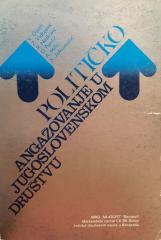
Političko angažovanje u jugoslovenskom društvu

Političko angažovanje u jugoslovenskom društvu

Mladost, 1985.
Serbisch. Latein Schrift. Taschenbuch.
8,50
Snažan eho brionski: Odjeci Brionskog plenuma u Bosni i Hercegovini 1966. godine

Snažan eho brionski: Odjeci Brionskog plenuma u Bosni i Hercegovini 1966. godine

Amir Duranović

Amir Duranović's book reconstructs in detail the dramatic year 1966 and the Fourth (Brion) Session of the Central Committee of the Communist Party of Yugoslavia (July 1–2, 1966), at which Aleksandar Ranković, the long-time head of the UDB and vice preside

Udruženje za modernu historiju (UMHIS), 2017.
Kroatisch. Latein Schrift. Taschenbuch.
9,54
Fašizam i neofašizam

Fašizam i neofašizam

Centar društvenih djelatnosti SSOH, 1976.
Kroatisch. Latein Schrift. Hardcover.
9,50
Mraz dolazi iz Kremlja

Mraz dolazi iz Kremlja

Zdeněk Mlynář
Globus, 1985.
Kroatisch. Latein Schrift. Fester Einband mit Schutzumschlag.
6,324,74 - 7,16
Ljubljana u borbi 1941–1945: Zbornik sećanja

Ljubljana u borbi 1941–1945: Zbornik sećanja

The collection brings together the memories of participants in the national liberation struggle in Ljubljana during World War II. The collection contains personal testimonies, which provide insight into the everyday life, struggle and sacrifices of the in

Vojnoizdavački zavod, 1978.
Serbisch. Latein Schrift. Fester Einband mit Schutzumschlag.
9,76
Sudbonosni podvig Jugoslavije: Podsjećanje na historijsko NE staljinizmu, događaj koji je opredijelio budućnost Jugoslavije

Sudbonosni podvig Jugoslavije: Podsjećanje na historijsko NE staljinizmu, događaj koji je opredijelio budućnost Jugoslavije

Raif Dizdarević

The book by Raif Dizdarević, one of the last living actors of Yugoslav diplomacy, presents his reconstruction of the most fateful moment of post-war Yugoslavia – the split with Stalin and the Informburo in 1948–1953.

Udruženje za modernu historiju (UMHIS), 2018.
Kroatisch. Latein Schrift. Taschenbuch.
23,58