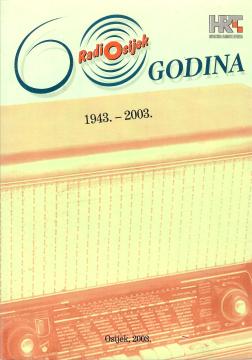
60 godina Radio Osijeka (1943. – 2003.)

60 godina Radio Osijeka (1943. – 2003.)

Zlata Živaković-Kerže, Samir Klasiček, Amoreta Hofšauer Bajto

Die 2003 in Osijek veröffentlichte Monografie würdigt sechs Jahrzehnte ununterbrochenen Sendebetriebs von Radio Osijek – einem der ältesten und einflussreichsten regionalen Radiosender Kroatiens.

Das Buch beleuchtet die wichtigsten Phasen: die Kriegsjahre und die Propaganda, den Wiederaufbau nach dem Krieg im sozialistischen Jugoslawien (als Radio Osijek innerhalb von Radio Zagreb), die Entwicklung in den 1960er und 1970er Jahren (Lokalprogramme, Musik, Nachrichten, Sport) und die turbulenten 1990er Jahre – den Krieg in Slawonien, die Belagerung von Osijek und die Rolle des Radios bei der Information und moralischen Unterstützung der Bevölkerung (Sendungen aus den Luftschutzbunkern, „Slobodni Osijek“ usw.). Besonderes Augenmerk liegt auf den technischen Entwicklungen, bekannten Moderatoren, Journalisten, Redakteuren und Sendungen, die die Identität des slawonischen Publikums prägten.

Diese dokumentarische Monografie mit Fotografien, Archivmaterialien, Zeugenaussagen und Statistiken ist eine wertvolle Quelle für die Mediengeschichte Ostslawoniens und zeigt, dass Radio Osijek mehr als nur ein Medium war: die Stimme der Stadt in den schwierigsten Momenten.

Editor
Željka Bačić
Maße
24 x 17 cm
Seitenzahl
46
Verlag
Grafika, Osijek, 2003.
 
Latein Schrift. Taschenbuch.
Sprache: Kroatisch.

Angeboten wird ein Exemplar

Zustand:Gebraucht, in ausgezeichnetem Zustand
Zum Warenkorb hinzugefügt!
 

Interessieren Sie sich für ein anderes Buch? Sie können das Angebot über unsere Suchmaschine suchen und finden oder Bücher nach Kategorien durchsuchen.

Diese Titel könnten Sie auch interessieren

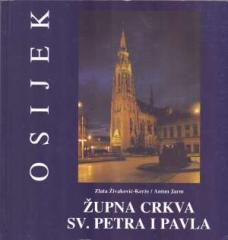
Župna crkva sv. Petra i Pavla u Osijeku

Župna crkva sv. Petra i Pavla u Osijeku

Zlata Živaković-Kerže, Antun Jarm

The book describes in detail the history, construction and significance of this neo-Gothic co-cathedral, one of the largest sacral buildings in Croatia. Located in the Upper Town of Osijek, the church is a symbol of the spiritual and cultural identity of

Rimokatolički župni ured sv. Petra i Pavla, 1995.
Kroatisch. Latein Schrift. Taschenbuch.
5,24 - 7,62
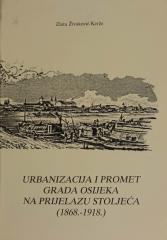
Urbanizacija i promet grada Osijeka na prijelazu stoljeća (1868.-1918.)

Urbanizacija i promet grada Osijeka na prijelazu stoljeća (1868.-1918.)

Zlata Živaković-Kerže

The book deals with the economic and urban development of Osijek during the key period after the Croatian-Hungarian Settlement until the end of World War I.

Društvo za hrvatsku povjesnicu Osijek, 1996.
Kroatisch. Latein Schrift. Hardcover.
8,76 - 9,36
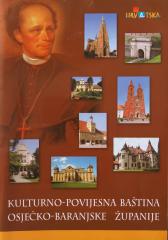
Kulturno-povijesna baština Osječko-baranjske županije: Kratak pogled na svjetovne i sakralne svjedoke prošlosti

Kulturno-povijesna baština Osječko-baranjske županije: Kratak pogled na svjetovne i sakralne svjedoke prošlosti

Zlata Živaković-Kerže

In the form of a short tourist guide, the cultural and historical heritage of Osijek-Baranja County is presented, namely Osijek, the county seat, and the towns and cities of Bizovac, Valpovo, Donji Miholjac, Našice, Đakovo, Aljmaš, Erdut, etc.

Turistička zajednica grada Osijeka, 2005.
Kroatisch. Latein Schrift. Taschenbuch.
2,89
Zašto je ubijen Ivo Pukanić?

Zašto je ubijen Ivo Pukanić?

Berislav Jelinić

The best-selling Croatian journalistic book of 2009. The author, long-time journalist and editor of Nacional Berislav Jelinić (who succeeded Pukanić as head of the weekly), wrote it just a year after the assassination on October 23, 2008 in Zagreb.

Sljedeći savjet, 2014.
Kroatisch. Latein Schrift. Taschenbuch.
18,32 - 24,5619,65
Kako što nastaje: novine, film, teatar

Kako što nastaje: novine, film, teatar

Karel Čapek

In a witty and instructive essay, Čapek describes how a newspaper, a film, and a theater play are created. Through humor and irony, he shows the complexity of the process – from idea to realization – and the different perspectives of the participants, dem

Znanje, 1985.
Kroatisch. Latein Schrift. Taschenbuch.
4,76
Suvremeni žurnalizam i javno mišljenje (dva eseja)

Suvremeni žurnalizam i javno mišljenje (dva eseja)

Franjo Pavešić.

Zbirka od dva eseja posvećena ulozi novinarstva u oblikovanju javnog mnjenja u međuratnom periodu, koju je objavio hrvatski novinar i publicista Franjo Pavešić.

Matica hrvatska, 1936.
Kroatisch. Latein Schrift. Hardcover.
7,36