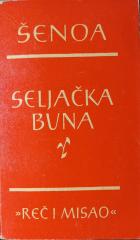
PSHK #40: August Šenoa II - Seljačka buna

August Šenoa's historical novel portrays the Croatian Peasant Revolt of 1573, following Matija Gubec and the struggle of oppressed serfs against feudal tyranny, injustice, and aristocratic violence.
Seljačka buna (The Peasant Revolt), first published in 1877, is a historical novel by August Šenoa and one of the major works of nineteenth-century Croatian literature. Set in the Croatian Zagorje region before and during the Peasant Revolt of 1573, it portrays the struggle of oppressed serfs against feudal exploitation and aristocratic power.
At the center of the narrative stands Matija Gubec, the leader of the uprising, who seeks to unite the peasantry in the pursuit of justice. His principal antagonist is the ruthless nobleman Franjo Tahy, representing the abuses of feudal authority. Šenoa explores class conflict, political intrigue, personal tragedy, and the lives of ordinary people caught in historical upheaval.
Combining historical documentation with literary imagination, the author creates a compelling narrative about freedom, human dignity, and resistance to oppression. The novel also examines the relationship between individuals and their communities.
This edition forms volume 40 of the series Pet stoljeća hrvatske književnosti (Five Centuries of Croatian Literature), presenting the second volume of Šenoa's selected works. Edited by Šime Vučetić, it also includes his introductory study of the novel and its historical background.
Angeboten wird ein Exemplar