Christmas at Rosie Hopkins' Sweet Shop

"Christmas at Rosie Hopkins' Sweet Shop" (2013) by Jenny Colgan is a sequel to the novel "Rosie Hopkins' Sweet Shop of Dreams".
Sphere Books, 2014.Paperback.
We present to you some of the books from our offer. An overview of all books is available by category. You can also use our search engine to quickly find the desired title.
"Christmas at Rosie Hopkins' Sweet Shop" (2013) by Jenny Colgan is a sequel to the novel "Rosie Hopkins' Sweet Shop of Dreams".
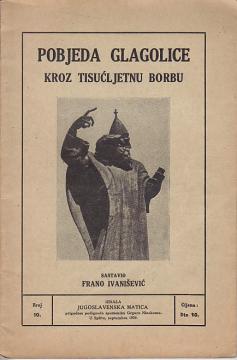
The book The Victory of the Glagolitic Script through a Thousand-Year Struggle by Frane Ivanišević is a significant work that documents the history and struggle of the Glagolitic script through the centuries. Published on the occasion of the erection of t
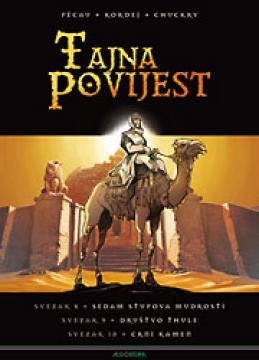
Tajna Povijest is a comic book series, which was later followed by Arkana and Velika Arkana. The script offers a re-reading of history in light of the actions of four archons who sometimes clash and sometimes cooperate to protect humanity.

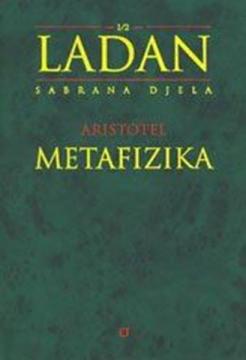
Metaphysics is Aristotle's most famous and influential philosophical work, consisting of 14 books. The name Metaphysics is not Aristotle's – it came later because the writings were placed "behind physics" (meta ta physika).
Introduction to Sociology by Michael Haralambos and Robin Heald is a classic textbook that systematically introduces key sociological topics and perspectives.
Mate Kovačević pointed out that he wrote the book concisely, focusing especially on forgeries and cover-ups within recent Croatian history, whose protagonists are mostly followers of former South-Communist historiography.
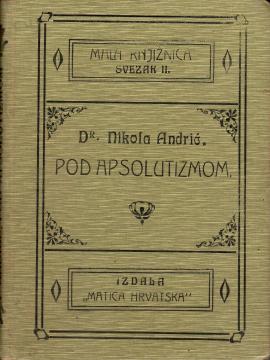
A scholarly study by Nikola Andrić on Croatian literature in the period of Bach's absolutism (1850–1860). A thorough analysis of literary life, writers, and works in one of the most difficult political periods in Croatian history. First edition from 1906.
**Nikola Andrić** in his book *Under Absolutism* provides a detailed history of Croatian literature in the sixth decade of the 19th century, more precisely in the period of **Bach's Absolutism (1850–1860)**. The work represents a **systematic and documented** analysis of literary creation at a time when the Croatian people were under strong political and cultural pressure from Viennese centrali...
The book provides a detailed account of naval conflicts in the Atlantic Ocean during World War II, with particular emphasis on the Battle of the Atlantic Convoy and the activities of German submarines – the so-called "invisible enemy".
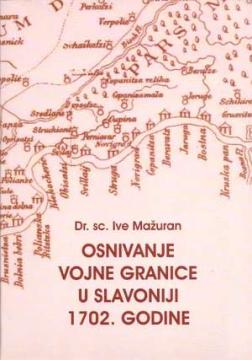
A historical study on the establishment of the Military Frontier in Slavonia in 1702, the Habsburg military and administrative organization, and changes in the status of the population following liberation from Ottoman rule.
*The Establishment of the Military Frontier in Slavonia in 1702* by historian Ivo Mažuran is a scholarly study dedicated to the implementation of the Habsburg military-administrative system in Slavonia during the early 18th century. The work examines the political, military, economic, and social circumstances surrounding the creation of the Slavonian Military Frontier following the Ottoman with...
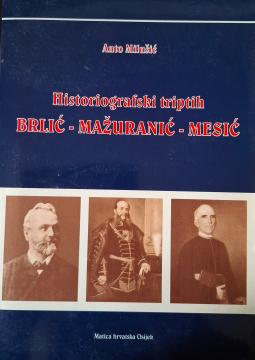
It presents an analytical account of three significant figures in Croatian history and literature: Andrija Torkvat Brlić, Ivan Mažuranić, and Vjekoslav Mesić. On 104 pages, the author explores their contributions in the context of Croatian historiography, political thought, and cultural identity. The book is part of the "Neotradicija" library and is available in paperback.
The book is an attempt to bring the scientific facts related to the archaeological research of the oldest civilizations closer to the reader and make them interesting. Written fluently, the book really reads like the most suspenseful novel.
The sixteenth volume covers the period from 1914 to 1936, marked by the First World War and its aftermath. The book is richly illustrated, providing a comprehensive account of the war, its aftermath, and the causes leading up to the Second World War.
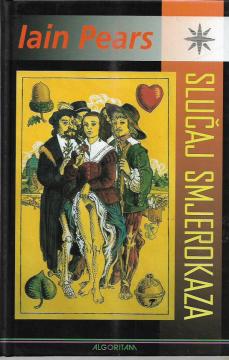
Translated, praised and read all over the world as the only true heir to the writing erudition of Umberto Eco, Iain Pears will keep you awake long after bedtime with his novel The Case of Smerkoaz.
The story of the murder of Dr. Robert Grove, a not very respected and not very polite member of the teaching council at Oxford's New College, which took place in 1663, will be told by four of his contemporaries and possible witnesses to the crime. Each of them will introduce their own prejudices into their narrative, interweave hidden interests and motivations, emphasize some circumstances, and...
The text is in parallel in English and Croatian. This is the fourth translation of Shakespeare's famous Sonnets into Croatian.
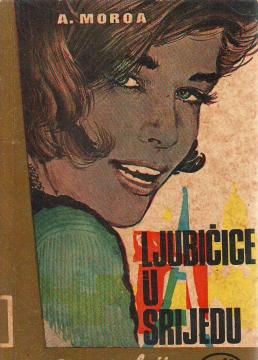
André Maurois, a French writer known for his psychological novels and biographies, explores themes of family relationships, love, and internal conflicts in this work, which is characteristic of his style.
The novel deals with subtle emotions and introspection of the characters, often interweaving personal dramas with social changes. Maurois, who often wrote about the loss of ideals and the search for happiness, probably continues his analysis of the human psyche and interpersonal relationships in Violets on Wednesday, although a detailed plot summary is not available in the accompanying sources.
Five Centuries of Croatian Literature (PSHK) is the largest publishing project in the history of Croatian literature.

Pearl S. Buck depicts the life of Chinese peasant Wang Lung, his rise from poverty to wealth, and the disintegration of family ties. The novel explores the relationship between man and land, tradition, social change, and moral challenges.
The Good Earth by Pearl S. Buck is one of the most famous novels of the 20th century and a seminal work by the author who brought the Chinese rural world closer to millions of Western readers. The plot follows the life of Wang Lung, a humble Chinese peasant who marries a maidservant named O-Lan, a woman of modest, quiet, but extremely strong character. At the heart of the novel is man’s relatio...
A collection of realistic stories by Vjenceslav Novak about life in the poor hinterland of Senj. They depict the difficult everyday life of the people of Podgora, poverty, customs, family dramas and the struggle for dignity in the harsh Podgora environmen
Deze Kostolanyi is an exceptional Hungarian artist, originally from Subotica, who has achieved success in many literary genres, from poetry to essays to theater plays.
Published in 1891, the novel is one of Henryk Sienkiewicz's most famous psychological and social works. Unlike his historical novels, this work presents an introspective and philosophical account of the decadent nobility of the 19th century.