Die Stunde der Erben

Die Stunde der Erben

Charlotte Link

The novel follows the third generation of the Marty family. Alexandra takes over the family legacy and company and faces business, family and personal challenges in Germany from the 1970s until the country's reunification.

Die Stunde der Erben is the final part of the historical-family trilogy Sturmzeit, in which Charlotte Link depicts almost the entire 20th century through the fate of the Marty family. After the first two novels followed the life of the strong and determined Félicie Lavergne during two world wars and the post-war period, the third part focuses on her granddaughter Alexandra Marty. The story begins in Germany in 1977, during a period of social and political change, and extends all the way to the end of the Cold War and German unification.

Alexandra inherits her grandmother's tenacity, sense of responsibility and desire for independence. After Felicie's death, she takes over the management of the family toy manufacturing company. Faced with the modernization of the economy and global competition, she makes risky business decisions that endanger both the company and family relationships. At the same time, she goes through personal crises, reexamining her marriage, relationships with her children and her own identity, trying to step out of the shadow of her famous grandmother.

The novel is not just a story about inheritance in the material sense, but above all about the transfer of values, responsibilities and family burdens from one generation to the next. Through the fates of several generations, Link shows how major historical changes – student movements, economic globalization and the reunification of Germany – shape the private lives of her characters. The final part of the trilogy rounds off the story of the Marty family, showing that the real inheritance is not only property and the family business, but character, experience and the ability to find one's own path despite the expectations of previous generations.

Maße
18,5 x 11,5 cm
Seitenzahl
541
Verlag
Blanvalet, München, 2010.
 
Latein Schrift. Taschenbuch.
Sprache: Deutsch.

Angeboten wird ein Exemplar

Zustand:Ungebraucht
Zum Warenkorb hinzugefügt!
 

Interessieren Sie sich für ein anderes Buch? Sie können das Angebot über unsere Suchmaschine suchen und finden oder Bücher nach Kategorien durchsuchen.

Diese Titel könnten Sie auch interessieren

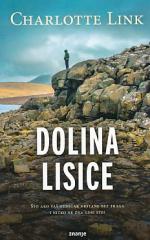
Dolina lisice

Dolina lisice

Charlotte Link

In order to make money, a petty criminal tries his hand at kidnapping, and everything goes absolutely wrong.

Znanje, 2018.
Kroatisch. Latein Schrift. Taschenbuch.
4,86 - 4,88
Sturmzeit

Sturmzeit

Charlotte Link

The first part of the family saga follows Felicia Lavergne through the turbulent years before and during World War II. Love, family secrets, and historical turmoil shape the destinies of several generations.

Boulevard Taschenbuch, 1998.
Deutsch. Latein Schrift. Taschenbuch.
7,32
Pljačkaši prirode

Pljačkaši prirode

Thomas Daring

A book by Thomas Daring (pseud. of Anton Zischka) that focuses on the subject of colonial exploitation of natural resources during the 19th and 20th centuries. Very rarely offered with a beautifully preserved cover.

Naklada Binoza, 1939.
Kroatisch. Latein Schrift. Fester Einband mit Schutzumschlag.
23,48
Vrtoglavica

Vrtoglavica

Winfried G. M. Sebald

Sebald is not just a storyteller. His narrative process offers a model of consciousness that tells us: to be fully aware of oneself is to suffer from incurable vertigo.

Plato, 2020.
Serbisch. Latein Schrift. Taschenbuch.
6,52
Anđeo sa zapadnog prozora

Anđeo sa zapadnog prozora

Gustav Meyrink

The Angel of the West Window is a strange fictional novel by Gustave Meyrink steeped in alchemical, hermetic, occult and mystical imagery and ideas, interweaving the life of Elizabethan magician Dr. John Dee with that of a fictional modern descendant, Bar

NIRO Književne novine, 1982.
Serbisch. Latein Schrift. Taschenbuch.
Das Buch besteht aus zwei Bänden
15,42
I ne reče ni reči

I ne reče ni reči

Heinrich Böll

In Bolls Romanen ist eines der zentralen Themen der Versuch, in einer Zeit des Terrors sowie in einer Zeit des materiellen Wohlstands und der Korruption grundlegende moralische Werte zu bewahren.

Svjetlost, 1965.
Serbisch. Latein Schrift. Taschenbuch.
3,22 - 3,98