History of literature • Croatian literature
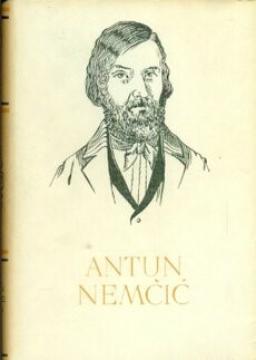
Pet stoljeća hrvatske književnosti: Antun Nemčić
Five centuries of Croatian literature: Antun Nemčić, volume 34. Travelogues - Human destiny - Leaven without bread - Articles and feuilletons.Prepared by Branimir Donat.
Editor
Marin Franičević
Dimensions
20 x 13.5 cm
Pages
360
Publisher
Zora, Matica hrvatska, Zagreb, 1965.
Latin alphabet. Hardcover with dust jacket.
Language: Croatian.
One copy is available
Condition:Used, good condition (visible signs of use)
This is one of the first synthetic analyses of the so-called Croatian fantasy generation (or "Borgesians", "young prose" with elements of fantasy) that appeared in the late 1960s and during the 1970s.
Zavod za znanost o književnosti Filozofskoga fakulteta, 2000.
The book by the author duo, a kind of romanticized guide through the life and work of Miroslav Krleža, was created using the method of "biographical syllogism and hypothetical factography" (Lasić's strategy).
24 sata, 2013.
Croatian. Latin alphabet. Paperback.
9.987.49 €
Biography • History of literature • Serbian literature
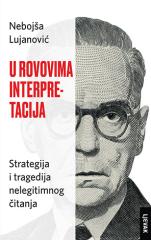
The title of the book In the Fire of the Worlds is a paraphrase of a sentence from Andrić's story "The Woman on the Stone" because, according to the author of this book, it best illustrates Andrić's political life: "To burn up without a trace, to lose one
Laguna, 2020.
Serbian. Latin alphabet. Hardcover.
11.98 €
Literary Theory • History of literature • Croatian literature
The book provides a thorough chronicle and analysis of centuries-old theatrical contacts between two cities – Osijek and Pécs – which historically shared the cultural space of the Pannonian Plain, especially during the period of the Habsburg Monarchy.
Matica hrvatska, 2012.
Croatian. Latin alphabet. Hardcover.
13.64 €
Literary Theory • History of literature • Croatian literature
Maja Bošković-Stulli, Divna Zečević, Eduard Hercigonja, Marin Franičević, Franjo Švelec, Rafo Bog...
A classic work of Croatian literary historiography. The edition covers the periods from oral tradition to modernism, emphasizing the interference of oral and written literature, sociological context, aesthetic norms, and European connections.