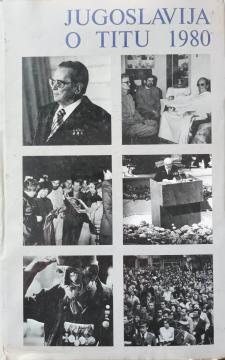
Jugoslavija o Titu 1980
One copy is available
- Traces of patina
- Damaged book cover

One copy is available
Are you interested in another book? You can search the offer using our search engine or browse books by category.
The book depicts the development of a Bosnian bey family that, throughout the 19th and 20th centuries, transformed from a landowning family into a modern bourgeois family, reflecting broader social changes in Bosnia and Herzegovina.
The author explores why Tito remains a popular symbol of stability, social security and independence, despite critical views of his regime. The book maps the cultural, political and everyday manifestations of "Titostalgia".
And what kind of husband was Tito? Man? The first Croatian biography of Comrade Jovanka answers that question, which was really of great interest to about 20 million Yugoslavs.
Academician Ljubo Boban, in his work Croatia in the Archives of the Government in Exile 1941–1943, brings together a collection of diplomatic reports from various European and international representative offices of the Yugoslav government in exile during
The author presents the political and ideological legacy of King Aleksandar I Karađorđević the Unifier. The book, published immediately after the king's death, is an attempt to preserve and transmit his political ideals to future generations.
"Lost Orientation" by Radovan Radonjić, published in 1985, represents a philosophical and sociological reflection on the then Yugoslav society and the crisis of socialist identity.