History of literature • Croatian literature
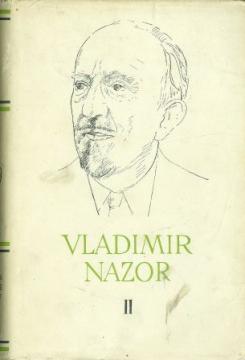
Pet stoljeća hrvatske književnosti: Vladimir Nazor II.
Five centuries of Croatian literature: Vladimir Nazor II. book 78. Veli Jože - Stories - From Split to the pyramids - With the partisans. Prepared by Šime Vučetić.
Editor
Marin Franičević
Dimensions
20 x 13.5 cm
Pages
462
Publisher
Zora, Matica hrvatska, Zagreb, 1965.
Latin alphabet. Hardcover with dust jacket.
Language: Croatian.
One copy is available
Condition:Used, good condition (visible signs of use)
Literary-historical studies on the relationship between literary, cultural and general history consist of four thematically coherent units: "Historiographic perceptions", "Monographic aspects", "Gundulić in the light of literary anthropology" and "Ancient
Leykam International, 2025.
Croatian. Latin alphabet. Paperback.
20.36 €
Croatian literature • History of literature • Literary Theory
The first part of Barč's history of Croatian literature provides an overview of the Illyrian movement, its writers, ideas and cultural significance in the period from the national revival to the creation of the Yugoslav state.
Jugoslavenska akademija znanosti i umjetnosti (JAZU), 1954.
Croatian. Latin alphabet. Hardcover with dust jacket.
The book by the author duo, a kind of romanticized guide through the life and work of Miroslav Krleža, was created using the method of "biographical syllogism and hypothetical factography" (Lasić's strategy).
24 sata, 2013.
Croatian. Latin alphabet. Paperback.
9.98 €
Croatian literature • History of literature • Literary Theory
An overview of the development of Croatian literature from the Middle Ages to the National Revival. Kombol presents the main authors, genres, and literary movements that shaped the foundation of the national tradition.
Matica hrvatska, 1945.
Croatian. Latin alphabet. Hardcover.
16.34 €
History of literature • Serbian literature • Biography
The title of the book In the Fire of the Worlds is a paraphrase of a sentence from Andrić's story "The Woman on the Stone" because, according to the author of this book, it best illustrates Andrić's political life: "To burn up without a trace, to lose one