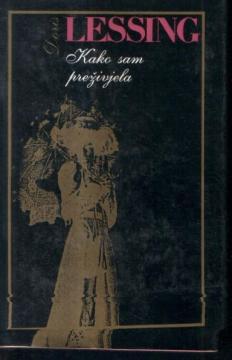
Kako sam preživjela

Kako sam preživjela

Doris Lessing

The novel How I Survived (1974) by Doris Lessing is a dystopian novel that follows the unnamed narrator, a middle-aged woman, in a futuristic city collapsing due to social and economic collapse.

Through her memoirs, Lessing explores themes of survival, the loss of civilized norms, and inner transformation in a chaotic world.

The narrator lives in an apartment, watching society fall apart—gangs roam the streets, food and power shortages become commonplace, and the government loses control. Unexpectedly, she is brought into the care of Emily, an adolescent, and her dog Hugo, beginning her emotional and moral connection with the girl. As Emily grows up, the narrator witnesses her struggle with love, rebellion, and adjusting to a harsh reality. At the same time, the narrator experiences visions through the walls of her apartment, entering a symbolic, surreal world that reveals deeper truths about herself and humanity.

The novel combines a realistic depiction of social collapse with psychological and mystical elements, exploring themes of motherhood, responsibility, and hope in the midst of ruin. Lessing uses an introspective style to emphasize the fragility of civilization and the strength of the human spirit. The work is notable for its dystopian vision and feminist portrayal of women's inner strength.

Original title
The Memoirs of a Survivor
Translation
Mate Maras
Editor
Mirjana Buljan
Dimensions
21 x 14 cm
Pages
194
Publisher
Globus, Zagreb, 1985.
 
Latin alphabet. Hardcover with dust jacket.
Language: Croatian.

Two copies are available

Copy number 1

Condition:Used, excellent condition

Copy number 2

Condition:Used, excellent condition
 

Are you interested in another book? You can search the offer using our search engine or browse books by category.

You may also be interested in these titles

Magična ljubavna kutijica

Magična ljubavna kutijica

Santa Montefiore

The Magic Love Box (2002) follows the life story of Federica Campione, which begins in Vina del Mar, Chile, in the summer of 1982. Montefiore creates an epic story of growth, where the magic is not only in the box, but in the courage to let go of the past

Mozaik knjiga, 2006.
Croatian. Latin alphabet. Hardcover.
7.34
Ulazeći u Varcar

Ulazeći u Varcar

Ivan Lovrenović

The hybrid book – a novel, poem and essay in one – is a dedication to his native Varcar, a small village in central Bosnia, where the author's roots intertwine with the history, myth and chaos of the 20th century.

Fraktura, 2016.
Croatian. Latin alphabet. Hardcover with dust jacket.
14.4212.98
Megre putuje

Megre putuje

Georges Simenon

„Megreova putovanja“ je roman koji prati priču o povratku Ežena Megrea, čuvenog inspektora iz serije romana Megre, u rodnu Francusku nakon dužeg perioda rada u inostranstvu.

Svjetlost, 1965.
Serbian. Latin alphabet. Paperback.
2.84
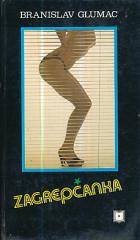
Zagrepčanka

Zagrepčanka

Branislav Glumac

Branislav Glumac published a novel without periods or commas in 1974, as the relentless stream of thought of a young rebel. Published in socialist Yugoslavia, the work caused a scandal with its openness and became a classic about generational rebellion.

IROS, 1986.
Croatian. Latin alphabet. Hardcover.
8.22 - 8.24
Seks skandal 2: Političari u krevetu

Seks skandal 2: Političari u krevetu

Izabela D.

The sequel to the ultimate hit Sex Scandal: Confessions of a Zagreb Model, Sex Scandal 2: Politicians in Bed, exposes the moral underbelly of Croatian politicians who publicly act as selfless fighters for the common good, while privately indulging in lust

24 sata.
Croatian. Latin alphabet. Paperback.
2.36
Pustolovine Toma Sawyera

Pustolovine Toma Sawyera

Mark Twain

Pustolovine Toma Sawyera prvi je pravi realistički dječji roman, ne samo u američkoj nego i u svjetskoj dječjoj književnosti. Najpoznatije Twainovo djelo i omiljeno dječje štivo u kojem je pisac opisao svoje dječačke doživljaje.

Nakladni zavod Hrvatske, 1947.
Croatian. Latin alphabet. Hardcover.
16.32