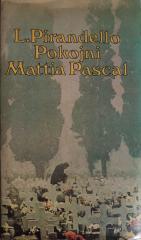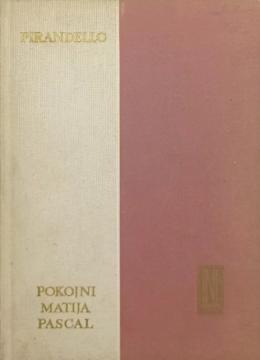
Pokojni Matija Pascal

Pokojni Matija Pascal

Luigi Pirandello

Luigi Pirandello's novel The Late Matthias Pascal (1904), a masterpiece of Italian literature, explores themes of identity, freedom, and social conventions through a tragic yet ironic story of a man trying to escape his life.

Matija Pascal, the main character, leads an unhappy life in the small town of Miragno. He works as a librarian, is married to Romilda, with whom he has an unhappy marriage, and is suffocated by financial burdens and family problems. When he accidentally learns that he has been declared dead due to an administrative error (after a body believed to be his is found), Matija sees an opportunity for a new beginning. Leaving the past behind, he takes on the identity of Adriano Meis and begins wandering around Italy and Monte Carlo.

At first, he enjoys his freedom, but soon realizes that without a legal identity he cannot fully live – he cannot get a job, get married or own property. Loneliness and the inability to create authentic relationships, especially after his love for Adriano Paleari, lead him to disappointment. In the end, Matija returns to Miragno, where he accepts his old life, but as a "deceased" – he lives on the margins, aware of the absurdity of existence.

Written in the spirit of modernism, the novel reflects Pirandello's philosophy of the fluidity of identity and the illusory nature of reality. Pirandello's humor and philosophical depth make the novel a universal story about the human search for freedom and the conflict between the individual and society.

Naslov izvornika
Il fu Mattia Pascal
Prijevod
Filip Dominiković
Urednik
Danica Visković
Dimenzije
20,5 x 14,5 cm
Broj strana
370
Nakladnik
Naprijed, Zagreb, 1962.
 
Latinica. Tvrde korice.
Jezik: Hrvatski.

Više primjeraka je u ponudi

Primjerak broj 1

Stanje:Korišteno, u vrlo dobrom stanju
Dodano u košaricu!

Primjerak broj 2

Stanje:Korišteno, u vrlo dobrom stanju
Oštećenja / nepogodnosti:
  • The cover is missing
Dodano u košaricu!

Primjerak broj 3

Stanje:Korišteno, u dobrom stanju (tragovi korištenja)
Oštećenja / nepogodnosti:
  • Damaged covers
  • Yellowed pages
  • Stains on cover
Dodano u košaricu!
 

Zanima Vas i neka druga knjiga? Možete pretražiti našu ponudu pomoću tražilice ili prelistati knjige po kategorijama.

Možda će Vas zanimati i ovi naslovi

Izopćena

Izopćena

Luigi Pirandello
Znanje, 1987.
Hrvatski. Latinica. Broširano.
4,86 - 4,99
Pokojni Mattia Pascal

Pokojni Mattia Pascal

Luigi Pirandello

Roman Luiđija Pirandela „Pokojni Matijas Paskal“ (1904), remek-delo italijanske književnosti, istražuje teme identiteta, slobode i društvenih konvencija kroz tragičnu, ali ironičnu priču o čoveku koji pokušava da pobegne od svog života.

Jutarnji list, 2004.
Hrvatski. Latinica. Tvrde korice s ovitkom.
4,56
Pokojni Mattia Pascal

Pokojni Mattia Pascal

Luigi Pirandello

Luigi Pirandellos Roman „Der verstorbene Matthias Pascal“ (1904), ein Meisterwerk der italienischen Literatur, behandelt Themen wie Identität, Freiheit und gesellschaftliche Konventionen anhand der tragischen und zugleich ironischen Geschichte eines Manne

Sveučilišna naklada Liber (SNL), 1982.
Hrvatski. Latinica. Tvrde korice s ovitkom.
4,994,50 - 5,624,99
Shannonov put

Shannonov put

Archibald Joseph Cronin

Kroninova dirljiva priča o iskupljenju. Robert Šenon, fanatični lekar-istraživač, žrtvuje ljubav i život za nauku, ali na kraju gubi sve – devojku, priznanje, zdravlje – samo da bi kroz patnju shvatio: medicina bez čovečnosti je ništa.

Otokar Keršovani, 1966.
Hrvatski. Latinica. Tvrde korice s ovitkom.
6,24
Malena je ime tanga

Malena je ime tanga

Almudena Grandes

Ako volite sirovu erotiku poput „Atlasa u oblaku“, ovo je senzualna saga – emotivna, provokativna, za one koji žele da osete puls zabranjene strasti! Grandes istražuje da li je ljubav kletva ili oslobođenje?

Mozaik knjiga, 2000.
Hrvatski. Latinica. Tvrde korice.
7,96 - 8,54
Proces

Proces

Franz Kafka

Kafka wrote The Process between 1914 and 1915, published posthumously in 1925. The novel is unfinished but with an added final chapter by Max Brod. Edition with a foreword by B. Živojinović and an afterword by Walter Killi.

BIGZ, 1990.
Srpski. Latinica. Broširano.
4,26