Proljeće u Badrovcu

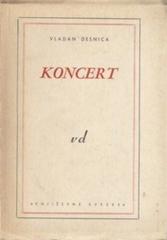
The collection "Spring in Badrovac" (published in Belgrade in 1955 by Prosveta, reprinted in Zagreb by SKD Prosvjeta in 2019) brings together short stories written by Desnica in the 1950s, focused on a Dalmatian village in post-war chaos.
Key stories from this collection include the title story and several others that deal with themes of transience, suffering, and the trauma of ordinary people after occupation and wartime devastation.
- “Spring in Badrovac”: The most famous and longest in the collection, set in the Dalmatian village of Badrovac in the spring of 1945, immediately after liberation. Through fragments of everyday life – whispers in a tavern, encounters on the road, children playing – Desnica depicts the collective trauma of war. The tension grows through rumors of revenge, but ends symbolically: children play in a cemetery, and spring brings only false hope. The story is an anthological one, often cited for its irony and lyricism (e.g., the description of dilapidated houses “in the fort”).
- “From Dawn to Dusk”: The diary of a day of a peasant working in the fields, observing the changes in the village after the war. The right uses an inner monologue to explore routine as an escape from pain – the hero engages in daydreams, but reality (disappearing neighbors, fear of new authorities) catches up with him. The key theme is: life as an endless cycle of waste and loss, without heroism. Critics highlight this story as an example of Desnica's "condensed observation".
- "Florjanović": The story of the old fisherman Florjanović, who faces losses: his son died in the war, his house was destroyed. Through his conversation with his grandson, Desnica exposes the generation gap and existential loneliness. The fisherman "looks" at the sea as a metaphor for transience, with elements of lyrical realism. This short story emphasizes Desnica's empathy towards marginalized characters, where suffering is not dramatized, but shown in quiet inevitability.
- "End of the day": Evening scene in the village: a group of men in a tavern are talking about the past, but the conversation falls into silence. Desnica uses dialogue to show how war leaves an emotional devastation – words are empty, memories are sick. It ends with a twilight that symbolizes the end of an era. This miniature is an example of Desnica’s economy: short but profound, focusing on “essential moments”.
- “Eye”: A more experimental tale about an observer (perhaps a madman or an artist) who “sees” a village through one eye, symbolizing a partial blindness to the truth. Through fragments of visions – war ruins, olive trees in bloom – Desnica explores the perception of reality. The theme is the knowledge of pain: life is not imagination, but “destruction and loss”. This story connects with Desnica’s essayistic style, where observation is “picky and lucid”.
These are just some of the stories that make up the mosaic of the collection: Badrovac as a microcosm of post-war Europe, where spring symbolizes a false new beginning. The end of the war may bring liberation, but not peace. Desnica writes with irony and philosophical depth, influenced by verism and existentialism, avoiding partisan didactics.
Angeboten wird ein Exemplar