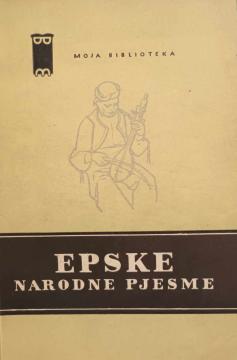
Epske narodne pjesme
Eine Auswahl von Texten mit Kommentaren und Erläuterungen sowie einer Diskussion epischer Volkslieder.
Bei vielen Völkern und in verschiedenen Teilen der Welt entwickelten sich aus der Sicht des poetischen, kreativen und formenden Prinzips zwei Arten von Literatur. Eine davon wurde von Autoren in Form von Liedern und Geschichten geschaffen und geschrieben Dakas, Romane, Dramen und andere literarische Formen. Ihre Werke sind erhalten geblieben, da sie ab dem 15. Jahrhundert entweder handgeschrieben oder später gedruckt wurden. Wir wissen fast alles, was wir über seine Autoren wissen müssen, d. h. wann sie ihre Werke geschaffen haben, wie sie geschrieben haben, was sie beeinflusst hat und was sie sagen wollten. Es handelt sich um geschriebene Literatur, also um die Art von Literatur, bei der die Nationalschrift im Rahmen einer detaillierten und spezifisch ausgearbeiteten schriftlichen Literatursprache eine entscheidende Rolle spielte (1). Ich unterstreiche nur die unbestreitbare Tatsache, dass die Gesamtheit einer nationalen und nationalen Sprache auf eine bestimmte Weise verwirklicht wurde, in der die grundlegenden Gesetzmäßigkeiten schriftlich und auf den Gesetzmäßigkeiten und Gesetzen des schriftlichen Ausdrucks und der Kommunikation von Gedanken ausgearbeitet wurden. Besonders hervorzuheben ist, dass die Kategorie der Schriftlichkeit bzw. die Kategorie des Geschriebenen und Geschriebenen (2), also jene Annahmen und Voraussetzungen, die sich aus der Tatsache des Schreibens ergeben, das Sprachsystem in eine gerichtete Richtung entwickelt und damit nur eine bestimmte Reihe erreicht der möglichen Realisierungen des konkreten Sprachsystems, die im schriftlichen Kontext vorliegen. Der Fluss schriftlicher Literatur weist zwar eine große Bandbreite phonologisch-phonetischer, morphologischer, syntaktischer und stilistischer Komponenten eines Sprachsystems auf, insbesondere in seiner historischen Reichweite. Aber es erschöpft es keineswegs bis zum Ende, und so üppig, vielseitig und reich seine historische Kontinuität auch sein mag, viele Möglichkeiten innerhalb ein und desselben Sprachsystems bleiben zwangsläufig ungenutzt.
Angeboten wird ein Exemplar
- Spuren von Patina