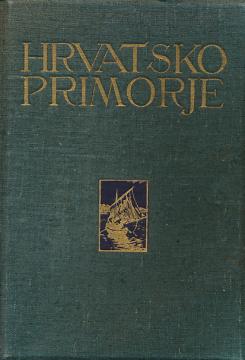
Hrvatsko Primorje
Antiquität

Hrvatsko Primorje

Milan Šenoa, Ivan Pl. Bojničić

"Croatian Primorje in the literal sense of the word includes the western side of the former counties of Modruška-Rijeka and Lika-Krbavska along the Adriatic Sea. It stretches from Rijeka-Šušak in the north to the river Zrmanja in the south."

"Leave the black impenetrable forests, deep ravines, dark valleys, above which the railway looms painfully, sighing heavily, bright green mountain meadows, surrounded by silent groves of conifers, the home of timid grouse,

  • leave those mountain villages with neat wooden houses, which carry huge stones on their roofs, with few people and with heavy snow two meters high,
  • leave that, then go down to the south, over that high mountain pass, which separates Gorski kotar from Primorje. Follow the railway, which is already descending considerably, leaving behind the stone Zlobin - the birthplace of the angry copper barrel. Go down another bend to the place where the railway line crosses the road coming from Fužina, then breathe in: immortelle and then some special smell, which is completely different from the smell of spruce and pine saplings, a smell that spreads for a kilometer away from of its cause, from the sea.

And the view that opens up on that lonely stone bend!

In front of us - or rather below us, a huge space opened up; Whoever has spent even a day passing through the mighty ravines of the mountain district, it seems immeasurable that what stretched all the way to the Učka karst and to the white Velebit, because the ancient Romans called him, coming from the sea, Mons Albus."

Illustrationen
Ivo Marochino
Maße
26 x 16 cm
Seitenzahl
100
Verlag
Knjižara Liburnija, Crikvenica, 1925.
 
Latein Schrift. Hardcover.
Sprache: Kroatisch.

Angeboten wird ein Exemplar

Zustand:Gebraucht, in ausgezeichnetem Zustand
Zum Warenkorb hinzugefügt!
 

Interessieren Sie sich für ein anderes Buch? Sie können das Angebot über unsere Suchmaschine suchen und finden oder Bücher nach Kategorien durchsuchen.

Diese Titel könnten Sie auch interessieren

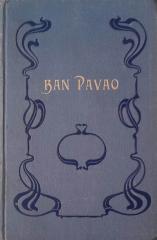
Ban Pavao - historijska drama u 5 činova (8 slika)

Ban Pavao - historijska drama u 5 činova (8 slika)

Milan Šenoa
Matica hrvatska, 1903.
Kroatisch. Latein Schrift. Hardcover.
12,99
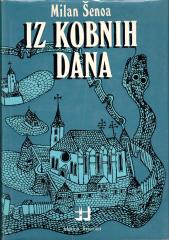
Iz kobnih dana

Iz kobnih dana

Milan Šenoa

A historical novel by Milan Šenoa, published in 1914. It is not only a historical narrative, but also a reflection on the enduring aspirations of the Croatian people for freedom and independence, making it a significant work in the corpus of Croatian lite

Nakladni zavod Matice hrvatske, 1971.
Kroatisch. Latein Schrift. Fester Einband mit Schutzumschlag.
3,98
Tragom prošlosti Broda

Tragom prošlosti Broda

Vladimir Rem

Lokalna feljtonska hronika Slavonskog Broda od rimskog doba (Marsunija), preko turske vladavine, Vojne granice i tvrđave do 19./20. veka. Topla, nostalgična priča o istoriji, običajima i znamenitostima grada.

Vlastita naklada, 1965.
Kroatisch. Latein Schrift. Taschenbuch.
6,72
Komunizam i čovjek: Odnos vlasti i pojedinca u Hrvatskoj (1958.–1972.)

Komunizam i čovjek: Odnos vlasti i pojedinca u Hrvatskoj (1958.–1972.)

Josip Mihaljević

Knjiga Josipa Mihaljevića analizira odnos između vlasti i pojedinca u komunističkoj Hrvatskoj (1958–1972), kroz represivne mehanizme, ideološke pritiske i ograničenja lične slobode u socijalističkom sistemu.

Hrvatski institut za povijest, 2016.
Kroatisch. Latein Schrift. Hardcover.
17,26
Glavaš – kronika jedne destrukcije

Glavaš – kronika jedne destrukcije

Drago Hedl

In Glavaš – Chronicle of a Destruction, Drago Hedl reveals the rise and fall of Branimir Glavaš, through a story of power, crime, and moral decline in post-war Slavonia. The documentary research turns into a poignant chronicle of our society.

Novi Liber, 2010.
Kroatisch. Latein Schrift. Taschenbuch.
22,46
Povijest i kultura Hrvata kroz 1000 godina: gospodarski i društveni razvitak u 18. i 19. stoljeću

Povijest i kultura Hrvata kroz 1000 godina: gospodarski i društveni razvitak u 18. i 19. stoljeću

Horvat
Josip Horvat

Dieser Teil von Horvats Werk schildert die großen Veränderungen, die im 18. und 19. Jahrhundert die kroatischen Gebiete erfassten, eine Zeit des Übergangs von der Feudal- zur modernen Gesellschaft.

Knjigotisak d. o. o., 2009.
Kroatisch. Latein Schrift. Hardcover.
12,22