Beskućnik

Beskućnik

Namik Kabil

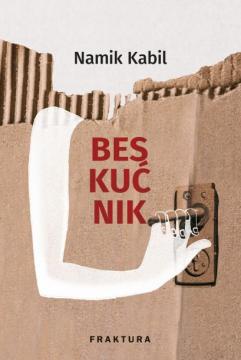
In the autobiographical novel Beskućnik Namik Kabil asks a universal and intimate question, where is our home - in Trebinje, Munich, Sarajevo or where we like to return?

In the novel Beskućnik Namik Kabil deals with the seemingly simple question of where our house is. Where is our home? Is it where we live or where we like to return; is it the house that we ourselves chose to live in or the one in which we grew up and which, in addition to memories, also carries the burden of emptiness that remains behind those who have left irretrievably? This very house of the author, which reminds us of final departures with every arrival, becomes the main character in this novel, which escapes both sale and demolition, and the new life intended for it by the heirs, and in this way it grows into a story, into a novel, bringing to saw the fragility of all our identities.

Namik Kabil, who says that he is braver in literature than in life, uses this courage to write powerful prose in Beskućnik not only about all our houses and moves, but also about universal issues of family relationships, love, losses, war and life migrations that the sense of belonging always put to the test again and again.

Editor
Marina Vujčić
Titelseite
Nikolina Žabčić
Maße
21 x 14 cm
Seitenzahl
176
Verlag
Fraktura, Zaprešić, 2024.
 
Latein Schrift. Fester Einband mit Schutzumschlag.
Sprache: Kroatisch.
ISBN
978-9-53358-720-2

Im Angebot sind keine Exemplare vorhanden

Das letzte Exemplar wurde kürzlich verkauft.


Interessieren Sie sich für ein anderes Buch? Sie können das Angebot über unsere Suchmaschine suchen und finden oder Bücher nach Kategorien durchsuchen.

Diese Titel könnten Sie auch interessieren

Rudnik čvaraka

Rudnik čvaraka

Tomislav Šovagović

The debut work of Croatian writer Tomislav Šovagović, awarded the Josip and Ivan Kozarac Award in 2012, is a dedication to Slavonia – the region of his childhood that the author, born in Dalmatia, observes with foreign but tender eyes.

Mozaik knjiga, 20112.
Kroatisch. Latein Schrift. Taschenbuch.
11,56
Ljubičice u srijedu

Ljubičice u srijedu

Andre Maurois

André Maurois, a French writer known for his psychological novels and biographies, explores themes of family relationships, love, and internal conflicts in this work, which is characteristic of his style.

Svjetlost, 1965.
Kroatisch. Latein Schrift. Taschenbuch.
3,42 - 3,62
Proces

Proces

Franz Kafka

Kafka wrote The Process between 1914 and 1915, published posthumously in 1925. The novel is unfinished but with an added final chapter by Max Brod. Edition with a foreword by B. Živojinović and an afterword by Walter Killi.

BIGZ, 1990.
Serbisch. Latein Schrift. Taschenbuch.
4,26
Godan

Godan

Munshi Prem Chand
Kosmos, 1960.
Serbisch. Latein Schrift. Taschenbuch.
4,22 - 4,26
Malena je ime tanga

Malena je ime tanga

Almudena Grandes

If you like raw eroticism like Cloud Atlas, this is a sensual saga – emotional, provocative, for those who want to feel the pulse of forbidden passion! Grandes probes whether love is a curse or a liberation?

Mozaik knjiga, 2000.
Kroatisch. Latein Schrift. Hardcover.
8,54
Deobe

Deobe

Dobrica Ćosić

Deobe is a novel about the tragic division of Serbs into Chetniks and Partisans during World War II. Winner of the NIN Award, it is part of a wider epic trilogy, inspired by Ćosić's experiences and historical documents.

Prosveta, 1963.
Kroatisch. Latein Schrift. Fester Einband mit Schutzumschlag.
13,74