Kamen, cvijet i amen

Kamen, cvijet i amen

Boris Škifić

Kamen, cvijet i amen is a novel in which one dreams of another life and escape, a novel about a world in which there is no place for those who are sensitive and an island whose sunny idyll is only an illusion, and superstition and primitivism strike where

A family man works a boring and dull job, but one day he receives a message that jolts him out of the lethargy of (petty) bourgeois life and takes him directly to prison, for life. On an island, a group of children grow up who gather in the Band of Big Smokers and dream of a different life, far from the heat, the stone, the smoke of secretly purchased cigarettes, the local priest, the teacher and the family who are anything but happy. Criminals, dealers, prostitutes and corrupt lawyers do what is expected of them. And love, of course, remains ideal and unattainable. All this, seemingly incompatible, is skilfully incorporated in Stone, flower and amen - a novel of great contrasts.

After the notable novel Letters from Vinogradska, Boris Škifić presents himself as a writer who doesn't care about the boundaries of genres, so he combines a novel about growing up with crime, island with urban, love with brutal. Somewhere in the background, you can read the legend of the sea nemana, which is becoming less and less a metaphor and more and more a part of everyday life. The novel deftly combines this time now with reminiscences of the past with deep dives into the spaces of the subconscious.

Kamen, cvijet i amen is a novel in which one dreams of another life and escape, a novel about a world in which there is no place for those who are sensitive and an island whose sunny idyll is only an illusion, and superstition and primitivism strike where we are thinnest. It also raises the question of crime and punishment, the balance of which is never fair. Triple-marked by the words from the title, written in an eruptive and energetic style, this is a prose of naturalistic scenes of the harshness of the real world and the soft parts of daydreaming and longing, and between this great contrast lies a great story.

  • Jagna Pogačnik

Editor
Jagna Pogačnik
Titelseite
Jasna Goreta
Maße
21 x 13,5 cm
Seitenzahl
224
Verlag
Hena Com, Zagreb, 2023.
 
Latein Schrift. Fester Einband mit Schutzumschlag.
Sprache: Kroatisch.
ISBN
978-9-53259-440-9

Angeboten wird ein Exemplar

Zustand:Ungebraucht
Zum Warenkorb hinzugefügt!
 

Interessieren Sie sich für ein anderes Buch? Sie können das Angebot über unsere Suchmaschine suchen und finden oder Bücher nach Kategorien durchsuchen.

Diese Titel könnten Sie auch interessieren

Žrtvovanje čarolije u svijetu Ivane Brlić Mažuranić

Žrtvovanje čarolije u svijetu Ivane Brlić Mažuranić

Sanja Lovrenčić

The essays collected in this book reveal the origins and meanders of Sanja Lovrenčić's years-long search for the authentic character of Ivana Brlić Mažuranić.

Mala zvona, 2024.
Kroatisch. Latein Schrift. Taschenbuch.
12,98
Zvezde su tamne

Zvezde su tamne

Peter Cheyney

„Zvezde su tamne“ je špijunski triler britanskog pisca Pitera Čejnija, poznatog po brzim, napetim pričama i tvrdokornim likovima.

Svjetlost, 1965.
Serbisch. Latein Schrift. Taschenbuch.
2,96 - 3,26
Knjiga moga oca

Knjiga moga oca

Ethem Mandić

Ovo je biografija o mom ocu sačinjena od sećanja i puke mašte. Istorija ne postoji, kao ni činjenice. Prošlost je nepoznata.

OKF d.o.o, 2016.
Kroatisch. Latein Schrift. Taschenbuch.
10,64
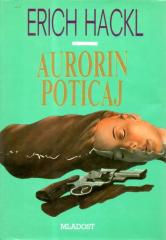
Aurorin poticaj

Aurorin poticaj

Erich Hackl

The work is based on a true event that occurred in Spain in 1933: Aurora Rodriguez killed her daughter Hildegart, a famous fighter for women's emancipation and a cult figure on the political scene of the time.

Mladost, 1990.
Kroatisch. Latein Schrift. Fester Einband mit Schutzumschlag.
4,96 - 4,98
Tri mušketira 1-2

Tri mušketira 1-2

Alexandre Dumas

Dumas' version of the story depicts the adventures of d'Artagnan and his friends from 1625 to 1628.

Epoha, 1966.
Kroatisch. Latein Schrift. Fester Einband mit Schutzumschlag.
Das Buch besteht aus zwei Bänden
9,48
I ne reče ni reči

I ne reče ni reči

Heinrich Böll

In Boll's novels, one of the central themes is the attempt to preserve basic moral values ​​in a time of terror, as well as in a period of material prosperity and corruption.

Svjetlost, 1965.
Serbisch. Latein Schrift. Taschenbuch.
3,22 - 3,98