Mati

Mati

Maksim Gorki

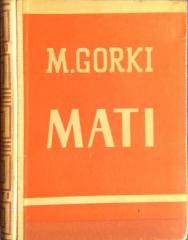
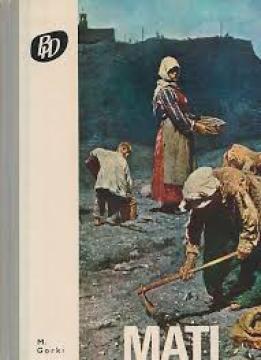
Maxim Gorky's novel "Mother" was published in 1906 and is one of the key works of Russian social realism. The work depicts the awakening of the working class in Russia through characters and events that emphasize social injustices and the need for revolut

The novel is set in a working-class neighborhood in an industrial suburb. The main character is Pelagija Nilovna Vlasova, widow of a worker and mother of a young man, Pavel Vlasov. Pelagia is portrayed as a humble, insecure and ignorant woman who leads a life full of suffering, enduring the poverty and rudeness of her late husband. However, her life changes when her son Pavel begins to participate in the revolutionary movement.

Pavel connects with a group of workers who organize secret meetings and spread revolutionary literature among the workers. Pelagia, although at first confused and worried about Paul's activities, gradually becomes aware of the social injustices affecting the workers. Through interacting with revolutionaries and witnessing injustices, she begins to understand the ideas that Pavel and his comrades advocate.

As the story progresses, Pelagia takes an increasingly active role in revolutionary activities. Her role as "mother" symbolizes a motherly attitude towards the entire labor movement. She becomes a messenger who transmits forbidden literature and participates in the organization of workers' meetings, risking her own life.

The novel culminates with Pavlo's arrest during a protest. Despite the loss of her son, Pelagia continues to fight, symbolizing the unwavering spirit of the revolution. Through her character, Gorky shows the transformation of an ordinary woman into a strong and determined revolutionary, emphasizing the power of change and solidarity among workers.

"Mati" is one of the most important works that shaped the literature of social realism and remains a powerful representation of the struggle for justice and human rights.

Titel des Originals
Мать
Übersetzung
Malik Mulić
Editor
Muris Idrizović
Titelseite
N. A. Kasatkina
Maße
20 x 14 cm
Seitenzahl
304
Verlag
Svjetlost, Sarajevo, 1975.
 
Latein Schrift. Hardcover.
Sprache: Kroatisch.

Im Angebot sind keine Exemplare vorhanden

Das letzte Exemplar wurde kürzlich verkauft.


Interessieren Sie sich für ein anderes Buch? Sie können das Angebot über unsere Suchmaschine suchen und finden oder Bücher nach Kategorien durchsuchen.

Diese Titel könnten Sie auch interessieren

Mati

Mati

Maksim Gorki

Maxim Gorkis Roman „Mutter“ erschien 1906 und ist eines der Schlüsselwerke des russischen Sozialrealismus. Das Werk schildert das Erwachen der Arbeiterklasse in Russland anhand von Charakteren und Ereignissen, die soziale Ungerechtigkeiten und die Notwend

Glas rada, 1950.
Kroatisch. Latein Schrift. Fester Einband mit Schutzumschlag.
4,36
Djetinjstvo

Djetinjstvo

Maksim Gorki
Mladost, 1982.
Kroatisch. Latein Schrift. Hardcover.
2,99
Moj život

Moj život

Maksim Gorki
Naklada Binoza, 1932.
Kroatisch. Latein Schrift. Fester Einband mit Schutzumschlag.
6,99
Sabrana djela A. P. Čehova #8: Čovjek u futroli i druge novele i putopisi

Sabrana djela A. P. Čehova #8: Čovjek u futroli i druge novele i putopisi

Anton Pavlovič Čehov

U ovoj knjizi sabrano je pripovjedačko djelo A. P. Čehova koje je nastalo u godinama njegova najzrelijeg stvaranja. Uz to, štampani su i njegovi putopisi »Iz Sibira« i »Otok Sahalin«.

Zora, 1960.
Kroatisch. Latein Schrift. Fester Einband mit Schutzumschlag.
13,58
U zemlji Amanullaha

U zemlji Amanullaha

Larissa Reissner

Živopisan prikaz autoričinog putovanja u Afganistan 1921.–1922., zemlju u burnom razdoblju modernizacije pod reformatorskim kraljem Amanullahom Khanom, sukoba tradicije i novoga doba te egzotičnog života afganistanskog društva.

Naklada Binoza, 1935.
Kroatisch. Latein Schrift. Fester Einband mit Schutzumschlag.
3,22 - 7,54
Savijest: Roman iz zbirke "Porodica Muratovih"

Savijest: Roman iz zbirke "Porodica Muratovih"

A. T. Šel. Mihajlov

"Conscience" (a novel about the Murat family) by A. T. Shel. Mikhailov is a psychological-moral novel about a Russian bourgeois family, internal conflicts, sin, responsibility and the voice of conscience. Popular Russian fiction in Croatian translation.

Tisak i naklada Lav. Weissa, 1920.
Kroatisch. Latein Schrift. Taschenbuch.
9,36