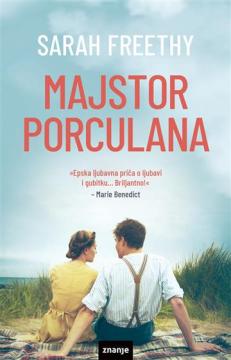
Majstor porculana
Der Roman ist Sarah Freethys Debütwerk, eine historische Fiktion mit Elementen von Mysterium, Liebe und Kunst, inspiriert von der realen Allacher Porzellanmanufaktur im Konzentrationslager Dachau (der SS-Produktion von „arischem“ Porzellan).
Die Geschichte entfaltet sich auf zwei Zeitebenen:
– 1929–1940er Jahre, Deutschland (Weimar, Berlin, Dachau): Die jungen Künstler Bettina Vogel, eine Avantgarde-Malerin, und Max, ein talentierter jüdischer Architekt und Porzellanmeister, verlieben sich im pulsierenden Bohème-Leben der Weimarer Republik. Ihre leidenschaftliche, verbotene Beziehung (sie eine „Arierin“, er ein Jude) gerät in Konflikt mit dem Aufstieg des Nationalsozialismus. Max’ Talent für Porzellan erregt die Aufmerksamkeit des Regimes: Er wird zur Zwangsarbeit in der Porzellanmanufaktur Allach gezwungen, wo die SS Häftlinge zur Herstellung luxuriöser Figuren und Servicegeschirre einsetzt. Die Liebenden kämpfen inmitten von Verfolgung, Verrat, Konzentrationslagern und Krieg ums Überleben. Bettina riskiert ihr Leben, um Max und ihr Geheimnis zu schützen, während die Kunst zu einem Ort des Widerstands und der Zuflucht wird.
– 1993, Gegenwart in Amerika/Europa: Bettinas Tochter Clara Vogel (oder eine ähnliche Figur), die ohne Vater aufwächst, erbt ein seltenes Porzellanobjekt – eine einzigartige, von einem Meister signierte Figur. Clara begibt sich auf die Suche nach der Wahrheit über die Vergangenheit ihrer Eltern. Ihre Nachforschungen stoßen auf die dunkle Geschichte des Porzellans, die Liebe einer Mutter und die Opfer des Krieges. Erinnerungsfragmente, Briefe und Artefakte enthüllen Geheimnisse, Verrat und Mut.
Der Roman verwebt eine epische Liebesgeschichte mit historischen Schrecken: dem Aufstieg des Nationalsozialismus, dem Holocaust, Zwangsarbeit und Kunst als Ausdruck des Widerstands. Porzellan symbolisiert Zerbrechlichkeit, Schönheit und Beständigkeit inmitten von Brutalität – eine treffende Metapher für Liebe und Menschlichkeit in der Hölle. Freethy schreibt emotional und detailreich und legt dabei den Fokus auf weibliche Stärke, künstlerischen Geist und die Auswirkungen des Krieges auf Generationen.
Angeboten wird ein Exemplar