Dinamit: Povijest klasnog nasilja u Americi
Antiquität

Dinamit: Povijest klasnog nasilja u Americi

Louis Adamić

The book documents a century of violence in the American labor movement — from 19th-century mining strikes to bombings and clashes with police — and exposes the brutal background to America's "class war."

The book is a detailed, vivid, and provocative history of labor struggles in the United States from the mid-19th century to the 1930s. Adamič describes the almost continuous violence between workers and capital: mining strikes (the Molly Maguires), massacres such as those at Homestead, Haymarket, Pullman, Ludlow, and numerous bombings, assassinations, and armed conflicts.

He particularly emphasizes the role of dynamite as a symbol of workers' resistance at a time when employers, private armies (the Pinkertons), and the state brutally suppressed strikes. Adamič traces the development of the labor movement, the rise and fall of unions (such as the Industrial Workers of the World – IWW), and shows how violence became part of the American class struggle.

The book is written vividly, almost like a novel, but it is based on thorough research. Adamič, himself an immigrant from Slovenia, writes from a working-class perspective and is critical of American capitalism, but he is not a blind idealist – he also shows the mistakes and violence within the labor movement itself.

Dynamite is a classic work of 20th-century American labor and leftist literature. Today, it is appreciated as an important historical document that exposes the dark side of the "American Dream" and industrialization.

Titel des Originals
Dynamite: The Story of Class Violence in America
Übersetzung
Branko Kojić
Maße
20 x 14 cm
Seitenzahl
354
Verlag
Naklada Binoza, Zagreb, 1933.
 
Latein Schrift. Fester Einband mit Schutzumschlag.
Sprache: Kroatisch.

Angeboten wird ein Exemplar

Zustand:Gebraucht, in sehr gutem Zustand
Nachteile/Unannehmlichkeiten:
  • The cover is missing
Zum Warenkorb hinzugefügt!
 

Interessieren Sie sich für ein anderes Buch? Sie können das Angebot über unsere Suchmaschine suchen und finden oder Bücher nach Kategorien durchsuchen.

Diese Titel könnten Sie auch interessieren

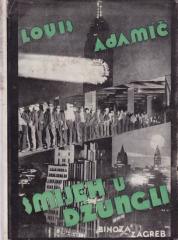
Smijeh u džungli: Autobiografija jednog američkog useljenika

Smijeh u džungli: Autobiografija jednog američkog useljenika

Louis Adamić

An autobiographical work by Louis Adamič, a Slovenian-American writer and one of the most important chroniclers of the immigrant experience in American literature. It ironically and honestly portrays the reality behind the myth of the "land of opportunity

Naklada Binoza, 1932.
Kroatisch. Latein Schrift. Fester Einband mit Schutzumschlag.
6,32 - 6,94
Klima izdaje

Klima izdaje

Andrew Boyle

A detailed study of the infamous Cambridge spies, a group of British intellectuals who spied for the Soviet Union during the 20th century. The book is written in a documentary style, but with a tense narrative, making it a compelling read about betrayal a

August Cesarec, 1982.
Kroatisch. Latein Schrift. Fester Einband mit Schutzumschlag.
6,244,99
Zaboravite da ste imali kćer

Zaboravite da ste imali kćer

Sandra Gregory, Michael Tierney

Sandra Gregory lived a life in Bangkok that one could only dream of until illness, unemployment and political unrest turned it into a nightmare.

Marjan tisak, 2003.
Kroatisch. Latein Schrift. Taschenbuch.
7,825,99 - 7,987,82
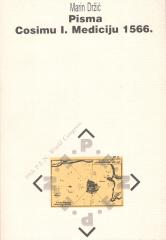
Pisma Cosimu I. Mediciju 1566.

Pisma Cosimu I. Mediciju 1566.

Marin Držić

Držićeva pisma Cosimu I. Mediciju, predstavljaju značajan dokument hrvatske renesansne književnosti i povijesti. Držić je uputio tri pisma Cosimu I., velikom vojvodi Toskane, između lipnja i kolovoza 1566., dok je boravio u Firenci.

Croatian P.E.N. Centre & Most / The Bridge, 1993.
Kroatisch. Latein Schrift. Taschenbuch.
8,326,66
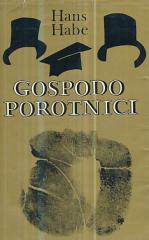
Gospodo porotnici: Deset velikih sudskih slučajeva iz historije zločina

Gospodo porotnici: Deset velikih sudskih slučajeva iz historije zločina

Hans Habe

"Gentlemen of the Jury" by Hans Habe presents ten famous court cases of the 20th century, depicting the course of investigations, trials and motives for crimes, as well as the relationship between justice, politics and public opinion.

Naprijed, 1966.
Kroatisch. Latein Schrift. Fester Einband mit Schutzumschlag.
2,99 - 6,42
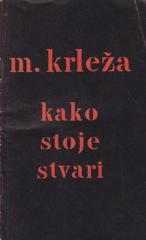
Kako stoje stvari: Predavanje održano u Domu JNA u Zagrebu 17. 12. 1952.

Kako stoje stvari: Predavanje održano u Domu JNA u Zagrebu 17. 12. 1952.

Miroslav Krleža

In his lecture How Things Are (1952), Krleža discusses the political and cultural situation of post-war Yugoslavia, emphasizing the need for critical thought, cultural renewal, and resistance to dogmatism.

Zora, 1953.
Kroatisch. Latein Schrift. Taschenbuch.
12,48