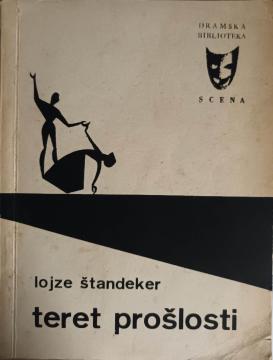
Teret prošlosti

Teret prošlosti

Editor
Pero Budak
Maße
18 x 13,5 cm
Seitenzahl
116
Verlag
Dramska biblioteka Scena, Zagreb, 1965.
 
Latein Schrift. Taschenbuch.
Sprache: Kroatisch.

Angeboten wird ein Exemplar

Zustand:Gebraucht, in gutem Zustand (Gebrauchsspuren)
Nachteile/Unannehmlichkeiten:
  • Slight damage to the cover
  • Traces of moisture
  • Library stamp
Reduzierter Preis: 4,993,99
Der Rabatt von 20 % gilt bis zum 31.03.2026 23:59 Uhr
Zum Warenkorb hinzugefügt!
 

Interessieren Sie sich für ein anderes Buch? Sie können das Angebot über unsere Suchmaschine suchen und finden oder Bücher nach Kategorien durchsuchen.

Diese Titel könnten Sie auch interessieren

Kako što nastaje: novine, film, teatar

Kako što nastaje: novine, film, teatar

Karel Čapek

In a witty and instructive essay, Čapek describes how a newspaper, a film, and a theater play are created. Through humor and irony, he shows the complexity of the process – from idea to realization – and the different perspectives of the participants, dem

Znanje, 1985.
Kroatisch. Latein Schrift. Taschenbuch.
4,76
Glumačka kuhinja 2

Glumačka kuhinja 2

Dejan Aćimović

In this second part of Actors' Kitchen, Croatian actors and actresses showed how much they know how to enjoy good food, good surroundings, even better company, and also a good drink.

Mozaik knjiga, 2004.
Kroatisch. Latein Schrift. Hardcover.
12,98
Kronika o glazbenoj i dramskoj djelatnosti u Belišću 1890.-1990.

Kronika o glazbenoj i dramskoj djelatnosti u Belišću 1890.-1990.

Dragutin Gibičar
Gradsko poglavarstvo, 2008.
Kroatisch. Latein Schrift. Taschenbuch.
9,987,49
Seljaci u gradu: izvorna šaljiva igra u dva čina

Seljaci u gradu: izvorna šaljiva igra u dva čina

Nikola Kos

The humorous play Villagers in the City presents a humorous depiction of the encounter between rural and urban mentality. The plot revolves around the arrival of rural characters in the city, where they are confronted with urban customs and lifestyles, wh

St. Kugli, 1883.
Kroatisch. Latein Schrift. Taschenbuch.
6,74
Zašto plačeš tata?

Zašto plačeš tata?

Ivica Ivanac

It is a work that deals with difficult post-war themes, personal tragedies, emotional wounds, and relationships within the family, especially between fathers and children.

Zagrebačko dramsko kazalište, 1960.
Kroatisch. Latein Schrift. Taschenbuch.
2,98
Kazališne veze Osijeka i Pečuha / Eszék és Pécs színházi kapcsolata

Kazališne veze Osijeka i Pečuha / Eszék és Pécs színházi kapcsolata

Zvonimir Ivković

The book provides a thorough chronicle and analysis of centuries-old theatrical contacts between two cities – Osijek and Pécs – which historically shared the cultural space of the Pannonian Plain, especially during the period of the Habsburg Monarchy.

Matica hrvatska, 2012.
Kroatisch. Latein Schrift. Hardcover.
13,64