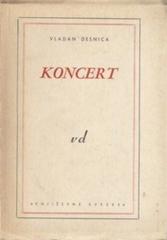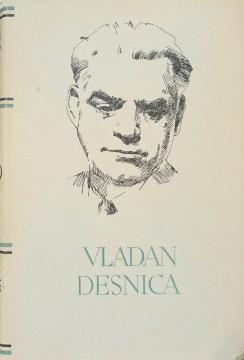
PSHK #117: Zimsko Ljetovanje / Pripovijesti
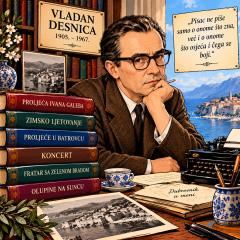
Band 117 der Reihe *Five Centuries of Croatian Literature* präsentiert den Roman *Winter Holiday* sowie eine Auswahl von Desnicas Erzählungen. Diese Ausgabe wurde von Vlatko Pavletić herausgegeben.
Der Roman Zimsko ljetovanje (Winterurlaub) spielt im Herbst und Winter 1943, während des Zweiten Weltkriegs und der Bombardierung von Zadar. Eine Gruppe von Einwohnern Zadars verlässt die zerstörte Stadt und begibt sich in das nahegelegene Dorf Smiljevci, wo sie gezwungen ist, mit der dortigen Bevölkerung zusammenzuleben. Diese Begegnung zwischen städtischer und ländlicher Welt offenbart Unterschiede in Mentalität, Bräuchen, Sprache und Lebensweise. Dabei schildert Desnica den Krieg nicht primär anhand großer militärischer Ereignisse, sondern durch dessen Auswirkungen auf den Alltag und die Psyche der einfachen Menschen.
Ein zentrales Thema des Romans ist die Unmöglichkeit, „den Anderen“ ohne Weiteres zu verstehen. Die Einwohner Zadars hegen diverse Vorurteile gegenüber den Dorfbewohnern, während diese wiederum ihre eigene Haltung zu den Neuankömmlingen entwickeln. Auf diese Weise erkundet der Roman das Verhältnis zwischen Stadt und Land sowie Fragen zu zivilisierten Umgangsformen, sozialen Ungleichheiten und kollektiven Identitäten. Besonders hervorgehoben wird das Motiv der Todesangst, das das Leben der Figuren durchzieht.
Der zweite Teil des Buches besteht aus Erzählungen. Desnicas Kurzprosa zeichnet sich durch zwei miteinander verknüpfte Ansätze aus: einen regional-realistischen Stil, der den Alltag eines dalmatinischen Dorfes und seiner Bewohner schildert, und einen psychologisch-meditativen Stil, der stärker auf das Innenleben des Einzelnen – dessen Gedanken, moralische Fragen und philosophische Dilemmata – fokussiert. Während in Erzählungen wie „Oko“, „Bunarevac“, „Florjanovići“, „Proljeće u Badrovcu“ und „Posjet“ der Alltag der Menschen in der dalmatinischen Region im Mittelpunkt steht, widmen sich Texte wie „Pravda“, „Priča o fratru sa zelenom bradom“, „Solilokvij gospodina Pinka“ und „Mudrac s istoka“ eher intellektuellen, psychologischen und philosophischen Themen.
Die Sammlung präsentiert Desnica als einen Autor, der realistische Gesellschaftsbeobachtung mit einer tiefgründigen Analyse des menschlichen Innenlebens verbindet; dabei dienen Krieg, Dorf- und Stadtleben sowie alltägliche Begebenheiten als Ausgangspunkte für Reflexionen über die menschliche Natur, die Vergänglichkeit, Verantwortung und zwischenmenschliche Beziehungen.
Angeboten wird ein Exemplar