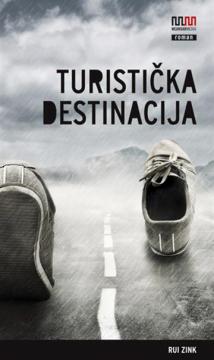
Turistička destinacija

Turistička destinacija

Rui Zink

A tourist destination deals with the question of the destination, the question of where we are going, as well as the idea of ​​tourists. A tourist is someone who doesn't know how things will unfold in the future, who is just visiting, just passing through

Rui Zink is in fashion. That is the inevitable truth. He started with the television show Night of Evil Languages, continued writing chronicles for the daily newspaper Independente... and then an experimental theater group from the University of Aveiro, delighted by Zink's stories Reality now in color, made a theater play based on that book.

In the daily newspaper Visao, March 7, 1996.

Rui Zink is a storyteller who plunges into the chaos and absurdity of everyday life, a sharp satirist, a master of irony - irony that sometimes backfires on the author himself - and a skilled craftsman of the Portuguese language. His works reflect the complexity of literature and life, the meaninglessness of institutions and their hypocrisy, the anxiety of the moment, love and sex, family and memory, the blindness of the media, the carefree ignorance of many people and, not least, the constant presence of death, which usually arrives in a stupid and funny way.

From a review by Helena Vasconcelos, 2005.

In one of these tourist programs - seven days of half-board in a country ravaged by war, where the beaches are mined and full of shells, where kidnappings of tourists are a daily occurrence - the protagonist of these pages, Servajit Duvla, to the readers Greg (tourist pseudonym), or according to the local taxi driver, Gereg, due to difficulties in pronunciation, finds himself. We learn that, due to some mishaps related to his son's moral honor, Greg paid for that tourist destination for one reason only: he wants to die, to kill himself.

Pedro Neves, February 3, 2009.

Original title
O destino turistico
Translation
Tanja Tarbuk
Editor
Branko Čegec
Dimensions
19.5 x 11.5 cm
Pages
207
Publisher
MeandarMedia, Zagreb, 2011.
 
Latin alphabet. Paperback.
Language: Croatian.
ISBN
978-9-53735-589-0

One copy is available

Condition:Used, excellent condition
Specificity of this instance:
Dedication
 

Are you interested in another book? You can search the offer using our search engine or browse books by category.

You may also be interested in these titles

Kaubojske priče: U 3:10 za Yumu i druge priče s divljeg zapada

Kaubojske priče: U 3:10 za Yumu i druge priče s divljeg zapada

Elmore Leonard

Poznato je da je Tarantino kao tinejdžer, opsednut pisanjem Elmora Leonarda, ukrao njegov roman „Prekidač“ iz knjižare, kako bi bio uhvaćen i kažnjen... Mnogo godina kasnije, snimio je „Džeki Braun“ na osnovu Leonardovog romana „Rum punč“.

Šareni dućan, 2008.
Croatian. Latin alphabet. Paperback.
9.74
Crna kutija

Crna kutija

Amos Oz

The Black Box is a kaleidoscope of married life and love relationships. It is a novel that implicitly speaks about all of us.

Hena Com, 2001.
Croatian. Latin alphabet. Hardcover.
10.988.78
Paralelni svijet

Paralelni svijet

B. D. Benedict

Parallel World is considered Benedikt's boldest and most influential novel, a true pioneering work in which he first publicly presented his "theory of parallel dimensions" which would later become the backbone of his entire oeuvre.

Stari grad, 1997.
Croatian. Latin alphabet. Hardcover.
8.226.58 - 8.32
Kuća u kojoj stanuje vrag

Kuća u kojoj stanuje vrag

Goran Tribuson

In The House Where the Devil Dwells, Tribuson also thematizes the time of new poverty, crazy jokes on the way to earning money, usury, jealousy, revenge, strikes, and murders.

Znanje, 2006.
Croatian. Latin alphabet. Paperback.
7.87
Kreutzerova sonata, Hadži-Murat

Kreutzerova sonata, Hadži-Murat

Lav Nikolajevič Tolstoj

Kreutzer's sonata belongs to those works of Tolstoy that the writer adapted in many ways to his view on moral issues, on marital morality above all.

Civitas, 2004.
Croatian. Latin alphabet. Paperback.
4.98
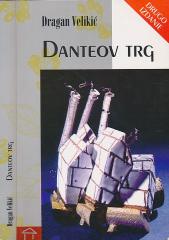
Danteov trg

Danteov trg

Dragan Velikić

As in Velikić's previous novels, the heroes weave analogous and often intertwined destinies of frustrated Central European citizens and intellectuals, the topography is very diverse, but also recognizable.

Stubovi kulture, 1998.
Serbian. Latin alphabet. Paperback.
6.72