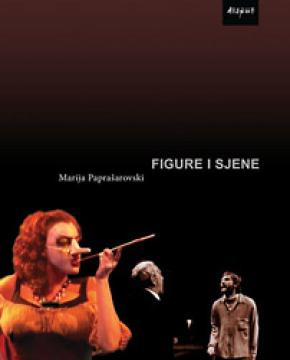
Figure i sjene (O žudnji, nasilju i svetom u dramama Jeana Geneta i Bernard-Mariea Koltesa)

Figure i sjene (O žudnji, nasilju i svetom u dramama Jeana Geneta i Bernard-Mariea Koltesa)

Marija Paprašarovski

Marija Paprasharovski's book Figures and Shadows deals with the plays of two prominent French writers, Jean Genet and Bernard-Marie Koltès.

We are talking about authors who have been present in the repertoire of Croatian drama theaters for several decades, their translations of the most important plays have been published, they are taught at colleges and art academies, but their dramatic oeuvre has not yet been adequately presented and evaluated in the Croatian language. Therefore, this excellent comparative study, in which the Genet-Koltès and text-performance connections are established above all, is at the same time a fundamental and pioneering scientific work.

The author convincingly proves that Genet and Koltès, with their small but extremely influential dramatic works, actually reacted to similar stimuli, dealt with similar issues and responded to similar existential, social, political and cultural questions. It also proves that their answers to these questions were different, sometimes contradictory, which is, of course, directly related to all the differences between the two of them as people and writers, and between their understanding of the function of dramatic literature and theater in contemporary society, as well as their relation to contemporary theater practice. Despite these differences and contradictions, according to the author, one can talk about a series of analogous procedures and attitudes. In both of these exceptional dramatists, she is primarily interested in the status of "desire", that is, the driving forces that their characters embody and that, by creating conflicting situations, set the dramatic action in motion; then "violence", which occurs in a wide range from verbal duels in the footsteps of French classicist drama to mutilations and murders to destructive coups; and the "holy", which most often appears thanks to actions that act like renewed or ironized rituals and stories that try to get closer to myth.

Editor
Irena Lukšić
Graphics design
Goran Grčić
Dimensions
20 x 16 cm
Pages
321
Publisher
Disput, Zagreb, 2011.
 
Latin alphabet. Paperback.
Language: Croatian.
ISBN
978-9-53260-136-7

One copy is available

Condition:Used, excellent condition
 

Are you interested in another book? You can search the offer using our search engine or browse books by category.

You may also be interested in these titles

Muzeji svijeta - Muzej lijepih umjetnosti Boston

Muzeji svijeta - Muzej lijepih umjetnosti Boston

This book provides an interesting insight into the Museum of Fine Arts in Boston.

Mladost, 1978.
Croatian. Latin alphabet. Hardcover with dust jacket.
10.98
Prethistorijske kulture

Prethistorijske kulture

Gert V. Natzmer

The book deals with the study of prehistoric cultures, their development, material remains, and influence on later periods.

Zora, 1966.
Croatian. Latin alphabet. Hardcover with dust jacket.
6.14
Umjetnost u slici 1: Narodi drevnog istoka

Umjetnost u slici 1: Narodi drevnog istoka

Carel J. Du Ry
Otokar Keršovani, 1970.
Croatian. Latin alphabet. Hardcover.
6.28
O arhitektonskom prostoru: eseji o epistemologiji arhitekture

O arhitektonskom prostoru: eseji o epistemologiji arhitekture

Philippe Boudon

Philippe Boudon, architect and theoretician of architecture, is the originator of the scientific discipline called architecturology, which aims to understand architecture from the point of view of scale and proportion.

Institut za povijest umjetnosti Sveučilišta u Zagrebu, 2006.
Croatian. Latin alphabet. Paperback.
8.26
Pop Art

Pop Art

Lucy R. Lippard, Lawrence Alloway, Nicolas Calas i Nancy Marmer

In this book, Lucy Lippard examines the predecessors of Pop Art and similar styles. In the second chapter, he talks about pop art in New York.

Jugoslavija, 1977.
Serbian. Latin alphabet. Hardcover with dust jacket.
13.2810.62
Kodovi identiteta

Kodovi identiteta

Leonida Kovač's discourse is explicit and direct, almost bodily. It fills and disrupts space. Her theory mimics the work of the performative, it is active. It takes place in one moment and one place of utterance/pronunciation.

Meandar, 2001.
Croatian. Latin alphabet. Paperback.
7.74