Priča o djevojci Višnji / Dan slobode
Antique

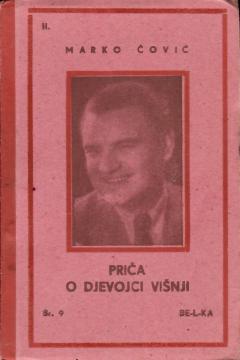
Priča o djevojci Višnji / Dan slobode

Marko Čović

"The Story of the Cherry Girl" and "Freedom Day" are two short stories by Marko Čović that are connected by lyricism, a patriotic tone, and a deep understanding of man's inner struggle.

In "The Story of the Girl Višnja", the author depicts the life of a young, sensitive girl Višnja, her growing up, her first love and facing the challenges of a world that is not always kind to her gentle nature. Višnja's story is intimate, filled with dreams of happiness, but also the disappointments that come with maturing. Through her feelings, attachment to home and native land, the novel carries a strong patriotic charge and a message about loyalty to one's own ideals and values.

In "Freedom Day", Čović depicts the events of a turning point for the individual and the community - the moment of liberation. The focus is on ordinary people, their hopes, fears and sense of responsibility towards their homeland. The heroes of this novella, through personal experiences, testify to the power of freedom, but also to the price it often demands. "Freedom Day" celebrates courage, togetherness and faith in a better tomorrow, emphasizing the importance of preserving human dignity.

Both novels are characterized by a simple, yet emotionally rich style, a pronounced sense of the psychological nuance of the characters, and a sincere attitude towards life, homeland, and man's enduring pursuit of truth, love, and freedom.

Editor
Zlatko Milković
Dimensions
11.5 x 7.5 cm
Pages
122
Publisher
Minerva nakladna knjižara, Zagreb, 1943.
 
Latin alphabet. Paperback.
Language: Croatian.

One copy is available

Condition:Used, excellent condition
 

Are you interested in another book? You can search the offer using our search engine or browse books by category.

You may also be interested in these titles

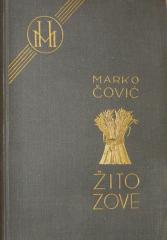
Žito zove

Žito zove

Marko Čović

The Grain Calls (1941) is a collection of short stories and novellas by Marko Čović with Bunjevci-Šokac themes. It vividly and lyrically depicts the everyday life of the Croats of Bačka, their customs, work in the fields, love, suffering and longing for t

Matica hrvatska, 1941.
Croatian. Latin alphabet. Hardcover.
4.99 - 7.86
Sabrana djela A. P. Čehova #3: Drama u lovu i druge novele

Sabrana djela A. P. Čehova #3: Drama u lovu i druge novele

Anton Pavlovič Čehov

The third volume of Collected Works contains Chekhov's most extensive novella, "A Drama in Hunting," as well as a number of longer stories from the period 1885-1886. There are humoresques such as Silo in a Bag, Eh, That Audience, and A Lot of Paper, as we

Zora, 1959.
Croatian. Latin alphabet. Hardcover with dust jacket.
8.74
Proljeće u Badrovcu

Proljeće u Badrovcu

Vladan Desnica

The collection "Spring in Badrovac" (published in Belgrade in 1955 by Prosveta, reprinted in Zagreb by SKD Prosvjeta in 2019) brings together short stories written by Desnica in the 1950s, focused on a Dalmatian village in post-war chaos.

SKD Prosvjeta, 2019.
Croatian. Latin alphabet. Hardcover.
15.26
Čudnovate zgode šegrta Hlapića

Čudnovate zgode šegrta Hlapića

Ivana Brlić-Mažuranić

The book The Strange Adventures of the Apprentice Hlapić is one of the most widely read novels for children by Ivana Brlić Mažuranić. It is a book for all time about the little, wise, brave and good apprentice Hlapić and his seven-day adventures.

Profil International, 2008.
Croatian. Latin alphabet. Hardcover.
13.4210.74
Sabrana djela A. P. Čehova #1: Humoreske

Sabrana djela A. P. Čehova #1: Humoreske

Anton Pavlovič Čehov

This book includes Chekhov's works from 1880-1885, i.e. humoresques, short stories, and sketches, starting with Letters to a Learned Neighbor, which Chekhov considered the beginning of his literary career.

Zora, 1959.
Croatian. Latin alphabet. Hardcover with dust jacket.
9.54
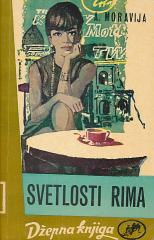
Rimske priče: izbor

Rimske priče: izbor

Alberto Moravia

Collections of short stories from Roman life in the post-war era: ordinary people from the people and the petty bourgeoisie – the poor, workers, small craftsmen – face misery, survival, jealousy, petty deceit and moral compromises in everyday life.

Otokar Keršovani, 1966.
Croatian. Latin alphabet. Hardcover.
3.98