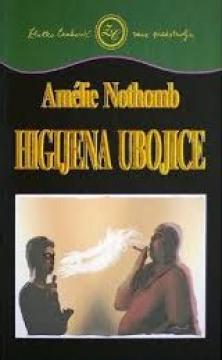
Higijena ubojice
Amélie Nothomb's debut novel is a satirical black comedy about the power of words and misogyny, set in a dark, messy house in Belgium. A dark portrait of a monster artist, it reminds us that words can be poison or a sword.
Eighty-three-year-old writer Prétextat Tach, Nobel Prize laureate in Literature, is suffering from a rare form of lung cancer and has only a few months to live. His death is announced prematurely, which sets off an avalanche: five female journalists, each from a different country, arrive in his shriveled world to interview him, dreaming of a sensational story.
Tach, overweight, dirty and misogynistic, sits in his room like a spider in a web. He receives each journalist individually, using linguistic acrobatics to humiliate, insult and break them. The first, a Dutch woman, runs away in tears; the French woman confronts his insults; the American woman quickly gives up. Tach’s monologues, full of meticulous contempt for the female sex, are turned into weapons: he accuses them of stupidity, superficiality and lack of talent, while revealing that his novels – endless, repetitive descriptions of the murder of women – are not fiction, but autobiographical crimes hidden in art.
The climax comes with the young Belgian Ninion, who holds out the longest. In a psychological battle, Tach reveals his secret: he is not a genius writer, but a murderer who has killed dozens of women, and writing serves him as a "hygiene" - cleansing his conscience through fiction. But Ninion, intelligent and persistent, turns things around: she uses his words against him, exposing the lie and breaking him. The novel explores themes of sexism, narcissism, the power of literature and the boundaries between reality and fiction, with Nothomba's sharp humor and absurdity.
No copies available
The last copy was sold recently.