Marie-Henry Beyle Stendhal
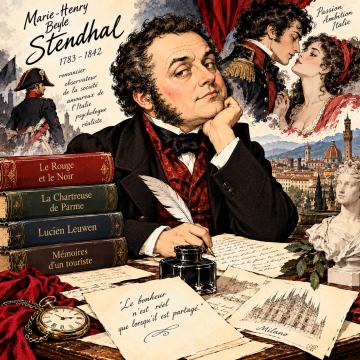
Marie-Henri Beyle, known by the literary pseudonym Stendhal (Grenoble, January 23, 1783 – Paris, March 23, 1842), was a French writer, essayist, and one of the founders of psychological realism in European literature. He grew up in a bourgeois family and spent his youth during the turbulent era of the French Revolution and the Napoleonic Wars. He served in Napoleon’s administration and took part in military campaigns, including the 1812 campaign in Russia. Following the fall of Napoleon, he lived in Italy, which profoundly shaped his literary and artistic sensibilities.
He began his literary career with travelogues, as well as biographical and art-historical studies; notable works include The Lives of Haydn, Mozart, and Metastasio (Vies de Haydn, de Mozart et de Métastase, 1814), A History of Painting in Italy (Histoire de la peinture en Italie, 1817), and Rome, Naples, and Florence (Rome, Naples et Florence, 1817). In his treatise On Love (De l'amour, 1822), he developed his well-known theory of the crystallization of love, in which he analyzed the psychological mechanisms behind falling in love. His first novel, Armance (1827), preceded his masterpiece, The Red and the Black (Le Rouge et le Noir, 1830), which—through the fate of the ambitious Julien Sorel—depicts the conflict between an individual and the social order, class prejudices, and his own passions. The novel The Charterhouse of Parma (La Chartreuse de Parme, 1839) presents a complex tale of love, politics, and ambition in Napoleonic and post-Napoleonic Italy.
Other notable works include the unfinished novel Lucien Leuwen (published posthumously in 1894), the autobiographical writings The Life of Henry Brulard (Vie de Henry Brulard) and Memoirs of an Egotist (Souvenirs d'égotisme), as well as the collection Italian Chronicles (Chroniques italiennes, 1855).
Stendhal’s body of work is characterized by psychological insight, irony, an analysis of social relations, and an exploration of the conflict between passion and reason. Although he did not achieve widespread popularity among readers during his lifetime, he was posthumously recognized as one of the greatest French novelists of the 19th century; his work exerted a profound influence on Balzac, Tolstoy, and Dostoevsky, and played a key role in the development of the modern psychological novel.
Naslovi u ponudi
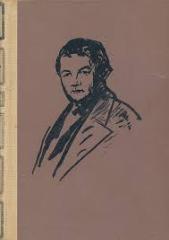
Crveni i crni: Kronika XIX. stoljeća
Julien Sorel, ein ehrgeiziger junger Mann einfacher Herkunft, versucht, in der Hierarchie der Restauration aufzusteigen, indem er der Kirche und dem Adel dient. Seine Liebesaffären mit Madame de Rênal und Mathilde de la Mole bringen ihn in einen Konflikt

Crveno i crno
Historisch-psychologischer Roman von Stendhal, erschienen 1830. Der vollständige Titel des Romans lautet „Rot und Schwarz, Chronik des 19. Jahrhunderts“. Der Protagonist ist Julien Sorel. Das Werk ist ein Bildungsroman, der seinen Erziehungs- und Lebenswe

Crveno i crno
Historisch-psychologischer Roman von Stendhal, erschienen 1830. Der vollständige Titel des Romans lautet „Rot und Schwarz, Chronik des 19. Jahrhunderts“. Der Protagonist ist Julien Sorel. Das Werk ist ein Bildungsroman, der seinen Erziehungs- und Lebenswe

Crveno i crno
Historisch-psychologischer Roman von Stendhal, erschienen 1830. Der vollständige Titel des Romans lautet „Rot und Schwarz, Chronik des 19. Jahrhunderts“. Der Protagonist ist Julien Sorel. Das Werk ist ein Bildungsroman, der seinen Erziehungs- und Lebenswe
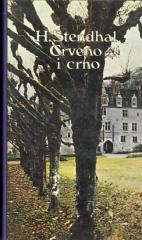
Crveno i crno
Der Roman erzählt vom sozialen Aufstieg eines armen jungen Mannes, Julien Sorel, in einem konservativen, konterrevolutionären und autoritären Regime in der Ära der Wiederherstellung der Monarchie nach dem Sturz Napoleons und der Rückkehr der Bourbonen-Dyn

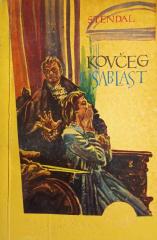
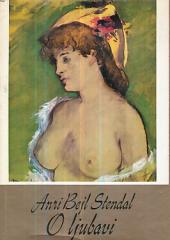
O ljubavi
Stendal je u delu „O ljubavi“ pokušao da objektivno i bez strasti definiše ljubav. Ova knjiga se može čitati i kao skrivena potvrda Stendalovih ljubavnih iskustava i neispunjenih želja...

Parmski kartuzijanski samostan
Stendalov roman govori o plemiću i pripadniku sveštenstva koji biraju ljubav umesto religije.
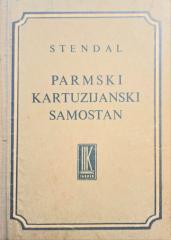
Parmski kartuzijanski samostan
Stendhalov roman govori o plemiću i pripadniku svećenstva koji umjesto religije odabire ljubav.