Pismo nerođenom djetetu

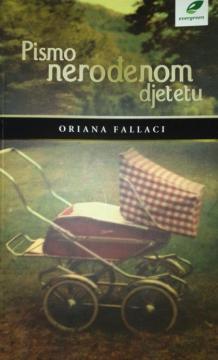
Pismo nerođenom djetetu

Oriana Fallaci

One of the most moving and courageous works of world literature of the 20th century. Written as a long monologue by a pregnant woman (Fallaci herself), the book is at once an intimate confession, a feminist manifesto, and a philosophical confrontation wit

The heroine is an independent, world-famous journalist who accidentally becomes pregnant. Instead of joy, she feels fear, anger, and rebellion: will the child be a “parasite” that will steal her freedom, career, and identity? In nightly conversations with the child in her womb, she begs him to decide for himself whether to be born or not – because she cannot make the decision herself. She questions patriarchal lies about the “sacred duty” of motherhood, a woman’s right to her body, fear of responsibility, but also the deep love that is born against her will.

The book culminates in a real tragedy – the miscarriage of pregnancy. The last pages are the cry of a mother who realizes that she did want the child, but too late. Fallaci offers no consolation or moralizes; her language is raw, poetic, and ruthless. The work caused a worldwide scandal in 1975, was banned, and the author was called out by both feminists and the Church. Today it is considered a classic of feminist literature and one of the most poignant testimonies about women's freedom and the price it pays.

Naslov izvornika
Lettera a un bambino mai nato
Prijevod
Ladislav Grakalić
Urednik
Davor Usoković
Dimenzije
20,5 x 12,5 cm
Broj strana
114
Nakladnik
Znanje, Zagreb, 2009.
 
Latinica. Broširano.
Jezik: Hrvatski.
ISBN
978-9-53195-758-8

Jedan primjerak je u ponudi

Stanje:Nekorišteno
Dodano u košaricu!
 

Zanima Vas i neka druga knjiga? Možete pretražiti našu ponudu pomoću tražilice ili prelistati knjige po kategorijama.

Možda će Vas zanimati i ovi naslovi

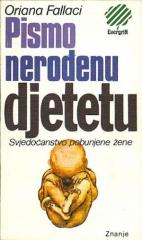
Pismo nerođenu djetetu: Svjedočanstvo pobunjene žene

Pismo nerođenu djetetu: Svjedočanstvo pobunjene žene

Oriana Fallaci

The touching and painfully honest dialogue of a mother with her unborn child, written by the famous Italian journalist and writer Oriana Fallaci, has been delighting generations of readers around the world for decades.

Znanje, 1980.
Hrvatski. Latinica. Broširano.
4,26
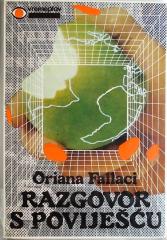
Razgovor s poviješću

Razgovor s poviješću

Oriana Fallaci

A Conversation with History is not just a collection of interviews, but also a reflection on history, politics, and human nature. The book exposes the complexities of powerful people and their influence on the world, making it a must-read for history and

August Cesarec, 1979.
Hrvatski. Latinica. Tvrde korice s ovitkom.
11,268,45
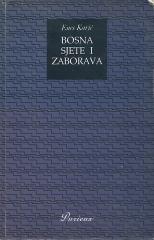
Bosna sjete i zaborava

Bosna sjete i zaborava

Enes Karić

Eseji o zemlji neiscrpnih inspiracija.

Durieux, 1997.
Hrvatski. Latinica. Broširano.
5,32
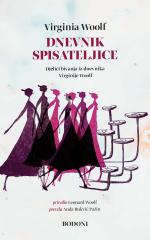
Dnevnik spisateljice: Djelići bivanja iz dnevnika Virginije Woolf

Dnevnik spisateljice: Djelići bivanja iz dnevnika Virginije Woolf

Virginia Woolf

The Diary of Virginia Woolf reveals the intimate thoughts of one of the most important authors of modernism. Translated for the first time in Croatian by Anda Bukvić Pažin, this is a must-read for all lovers of literature.

Bodoni, 2024.
Hrvatski. Latinica. Tvrde korice.
23,52
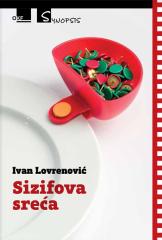
Sizifova sreća - razgovori, kronike

Sizifova sreća - razgovori, kronike

Ivan Lovrenović

Ivan Lovrenović's collection documents thirty years of change in Bosnia and Herzegovina through interviews, essays, and dialogues. The author, a witness to the era, examines old attitudes in the new reality, emphasizing the atrophy of rationality and soci

Synopsis, 2018.
Hrvatski. Latinica. Broširano.
12,54
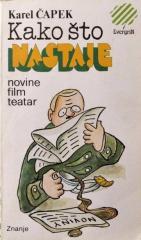
Kako što nastaje: novine, film, teatar

Kako što nastaje: novine, film, teatar

Karel Čapek

In a witty and instructive essay, Čapek describes how a newspaper, a film, and a theater play are created. Through humor and irony, he shows the complexity of the process – from idea to realization – and the different perspectives of the participants, dem

Znanje, 1985.
Hrvatski. Latinica. Broširano.
4,76