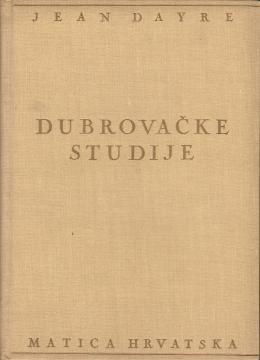
Dubrovačke studije
"Dubrovačke studije" Jeana Dayrea (izvorno objavljena 1929. godine) je knjiga koja nudi detaljan pregled povijesti, kulture i života grada Dubrovnika, s posebnim naglaskom na razdoblje Dubrovačke Republike.
Dayre je bio francuski povjesničar i diplomat, a kroz svoje pisanje o Dubrovniku približio je francuskoj publici složenu povijest i jedinstvenu poziciju tog grada-države na Jadranu.
Evo sažetka glavnih tema iz knjige:
Povijesni pregled Dubrovačke Republike Dayre prati uspon Dubrovnika kao samostalne republike, koja se razvila između Venecije i Osmanskog Carstva. Kroz analizu političkih i diplomatskih odnosa, Dayre opisuje kako je Dubrovačka Republika uspjela održati svoju autonomiju kroz mudru politiku neutralnosti, trgovinsku diplomaciju i visoku razinu organiziranosti.
Kultura i intelektualni život Jedna od ključnih tema je kulturni i intelektualni razvoj Dubrovnika, posebice u renesansnom i baroknom razdoblju. Dayre piše o bogatoj književnoj tradiciji, filozofiji, umjetnosti i arhitekturi koje su bile dio dubrovačkog života. Spominju se značajni pisci i intelektualci poput Marina Držića i Ivana Gundulića, čiji je rad utjecao ne samo na Dubrovnik nego i na širu regiju.
Ekonomska moć i trgovina Dubrovnik je bio trgovački centar, što je bilo ključno za njegov rast i održavanje samostalnosti. Dayre se fokusira na važnost pomorske trgovine, odnos Dubrovnika prema susjedima (Veneciji, Turskom Carstvu, Mletačkoj Republici) i kako su Dubrovčani koristili svoje trgovačke vještine za održavanje nezavisnosti.
Društveni i politički ustroj Autor analizira društvenu strukturu i organizaciju unutar Dubrovačke Republike, posebno ističući kako je aristokratska elita vladala kroz složen politički sustav, koji je uključivao Senat, Veliko vijeće i druge institucije. Dayre ukazuje na pažljivo balansiranje između moći aristokracije i potrebe za konsenzusom unutar društva.
Pad Dubrovačke Republike U završnim poglavljima, Dayre opisuje pad Republike 1808. godine, kada je Napoleonova vojska zauzela grad, što je označilo kraj više od četiri stoljeća nezavisnosti Dubrovnika. On analizira kako su vanjski politički pritisci i unutarnje slabosti pridonijeli konačnom padu.
Zaključak Knjiga "Dubrovačke studije" nudi detaljan i sažet pregled bogate povijesti Dubrovnika, pri čemu Jean Dayre prikazuje grad ne samo kao povijesnu činjenicu, već i kao kulturni simbol i primjer uspješne male države u izazovnom međunarodnom okruženju. Dayreov stil pisanja je analitičan, ali i izrazito čitljiv, što ovu knjigu čini korisnom za sve koji su zainteresirani za povijest Mediterana, trgovine i međunarodnih odnosa.
No copies available
The last copy was sold recently.