Ruka iz groba

Ruka iz groba

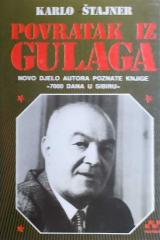
Karlo Štajner

Hand from the Grave (1985) by Karl Steiner, part of an autobiographical trilogy along with 7000 Days in Siberia and Return from the Gulag, is a collection of testimonies, interviews, and texts about the author, which delve into his experience of 20 years

Published by the Blue Library edition, the book continues the story of the life of Štajner, an Austro-Croatian communist who was arrested in Moscow in 1936 on charges of being a Gestapo agent.

The book contains interviews with the author, answers to readers' questions, and testimonies of others about his fate, inspired by Krleža's description of Štajner as a "hand from the grave" - a symbol of the miraculous return from the Siberian hell. Štajner describes the brutality of the camp, the psychological struggle, and his faith in communist ideals, despite suffering. Through reflections on Stalinism, justice, and humanity, the book questions the nature of totalitarianism and resistance. Of particular note is his relationship with his wife Sonja, who waited for him loyally, and his rehabilitation in 1956 and return to Yugoslavia.

The book is a powerful document of survival, but also a testimony to the historical context and social interest in the gulags. Appreciated for its authenticity and emotional depth, The Hand from the Grave is a key work that completes Steiner's trilogy, offering insight into the personal and collective struggle against dehumanization.

Naslovnica
Bronislav Fajon
Dimenzije
24 x 16 cm
Broj strana
211
Izdavač
Globus, Zagreb, 1986.
 
Latinica. Tvrde korice s omotom.
Jezik: Hrvatski.

Nema primeraka u ponudi

Poslednji primerak je nedavno prodat.
 

Zanima Vas i neka druga knjiga? Možete pretražiti našu ponudu pomoću pretrage ili prelistati knjige po kategorijama.

Možda će Vas zanimati i ovi naslovi

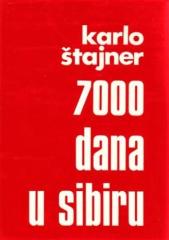
7000 dana u Sibiru

7000 dana u Sibiru

Karlo Štajner

Ich beweise, dass ich eine gute Zeit habe, um mich in meinem Unternehmen zu engagieren, und stelle mir vor, dass meine Mutter und ich Staljin in meiner Gemeinschaft kennengelernt haben.

Globus, 1982.
Hrvatski. Latinica. Tvrde korice s omotom.
14,26
Povratak iz Gulaga: Tajni referat Hruščova

Povratak iz Gulaga: Tajni referat Hruščova

Karlo Štajner

Eine Fortsetzung seiner Memoiren „7000 Tage in Sibirien“, in denen er seine zwanzigjährige Gefangenschaft in sowjetischen Gulags beschreibt. Das Buch geht tief in seine Erfahrungen in den Lagern ein und bietet zusätzliche Einblicke in Steiners Leben und R

Globus, 1986.
Hrvatski. Latinica. Tvrde korice s omotom.
10,76 - 11,24
Sudbonosni podvig Jugoslavije: Podsjećanje na historijsko NE staljinizmu, događaj koji je opredijelio budućnost Jugoslavije

Sudbonosni podvig Jugoslavije: Podsjećanje na historijsko NE staljinizmu, događaj koji je opredijelio budućnost Jugoslavije

Raif Dizdarević

Das Buch von Raif Dizdarević, einem der letzten noch lebenden Akteure der jugoslawischen Diplomatie, präsentiert seine Rekonstruktion des schicksalhaftesten Moments im Nachkriegsjugoslawien – den Bruch mit Stalin und dem Informbüro in den Jahren 1948–1953

Udruženje za modernu historiju (UMHIS), 2018.
Hrvatski. Latinica. Broširano.
23,58
U Titovim pandžama (Svjedočanstva)

U Titovim pandžama (Svjedočanstva)

Vladislav Musa

Der Inhalt des Buches ist real und erlebt im versklavten Heimatland, in der Diktatur und in Titos Gefängnissen.

Vlastita naklada, 1973.
Hrvatski. Latinica. Broširano.
27,36
Hrvatska borba za opstojnost 1918.-1998.

Hrvatska borba za opstojnost 1918.-1998.

Milivoj Kujundžić, Zdravko Dizdar

Das Buch enthält einen Bericht über die Geschichte Kroatiens von 1918 bis 1998 in vier historischen Perioden (1918–1941; 1941–1945, 1945–1990 und 1990–1998).

Hrvatski državni sabor, 2000.
Hrvatski. Latinica. Tvrde korice.
6,424,81
Zaraćeno poraće: Konfliktni i konkurentski narativi o stradanju i iseljavanju Talijana Istre

Zaraćeno poraće: Konfliktni i konkurentski narativi o stradanju i iseljavanju Talijana Istre

Franko Dota

Das Buch analysiert, wie sich nach dem Zweiten Weltkrieg (1943–1956) in Kroatien und Italien widersprüchliche historische Narrative über das Leid und die Massenauswanderung von Italienern aus Istrien und Rijeka entwickelten, entlarvt Mythen und fördert ei

Srednja Europa, 2010.
Hrvatski. Latinica. Broširano.
11,32