Jaroslav Hašek
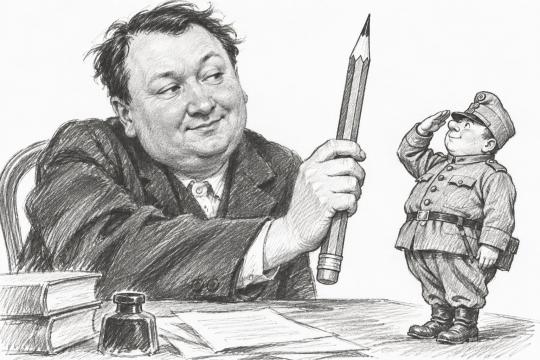
Jaroslav Hašek stands a pencil upright, and Švejk salutes it at once. The pencil has yet to issue a single order. In Hašek’s Austro-Hungarian army, that might count as a point in its favour.
Hašek (Prague, 1883 – Lipnice nad Sázavou, 1923) was a Czech writer, journalist and satirist. Before the war he wrote humorous stories, moved in anarchist circles and in 1911 launched the Party of Moderate Progress Within the Bounds of the Law. Its very name was a political joke, and Hašek turned campaign speeches into satire on party promises.
During the First World War he served in the Austro-Hungarian army and was taken prisoner by the Russians. He joined the Czechoslovak Legions, later sided with the Bolsheviks and worked in the Red Army. He returned to Prague in 1920. He spent his last years in Lipnice nad Sázavou, working on the novel he would leave unfinished.
Josef Švejk appeared in Hašek’s pre-war humorous fiction, including Dobrý voják Švejk a jiné podivné historky (1912). The character grew into the hero of Doživljaji dobrog vojnika Švejka (Osudy dobrého vojáka Švejka za světové války, 1921–1923), known in English as The Good Soldier Švejk. Every order is a chance for another story, and Švejk can carry out an instruction so literally that it looks absurd to the very people who gave it. The novel leaves open whether he is as innocent as he seems or knows exactly what he is doing.
In Můj obchod se psy a jiné humoresky (1915), Hašek already shows his fondness for storytellers who can talk their way through almost anything. Švejk’s speech owes much to that world of taverns, odd jobs and people accustomed to dealing with officials. Many readers picture him as Josef Lada drew him, while Ljudevit Jonke translated the novel into Croatian.
Titles in our offer
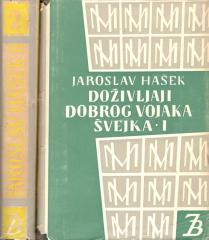
Doživljaji dobrog vojaka Švejka 1-2
A masterpiece of Czech literature and international anti-war satire following the adventures of Švejk during World War I. Hašek's classic exposes the absurdities of militarism and bureaucracy.
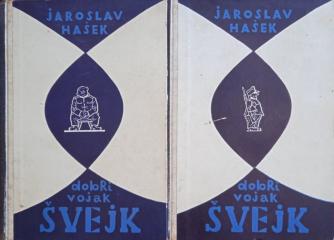
Doživljaji dobrog vojaka Švejka I-II

Doživljaji dobrog vojnika Švejka
One of the most popular works of world humorous prose, written between 1921 and 1923. The satirical anti-war story follows Josef Švejk, a simple-minded Czech soldier, during World War I in the Austro-Hungarian Monarchy.

Doživljaji dobrog vojnika Švejka
One of the world's most popular works of humorous prose written in 1921-1923. years. The main character, the "good soldier" Josef Švejk, is a participant in World War I.
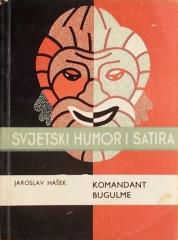
Komandant Bugulme
"Commander Bugulma" is a humorous short story by Czech writer Jaroslav Hašek, known for his satire and mockery of the army, bureaucracy, and wartime conditions.