Hanibal Lucić
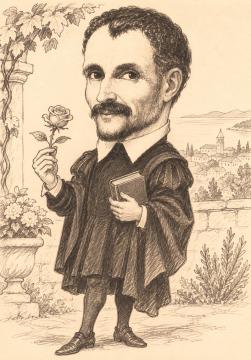
Hanibal Lucić (Hvar, 1485 – Hvar, 1553) was a Croatian Renaissance poet, playwright and translator, and a leading representative of Croatian Petrarchism. Born into a wealthy noble family, he participated in the public life of Hvar. During the Hvar uprising of 1510–1514, he left the island and spent time in exile, including in Trogir. His summer residence in Hvar survives as an important monument of Renaissance culture.
His surviving writings are limited in extent but carefully crafted. They include love poetry, drama, verse epistles, epitaphs, a poem praising Dubrovnik and a translation of Ovid’s epistle from Paris to Helen, Pariž Eleni. Combining Italian literary influences with Croatian poetic traditions, he developed a style distinguished by clarity, balanced composition and musicality.
His best-known lyric, Jur nijedna na svit vila, is an enduring celebration of feminine beauty. Its Petrarchan imagery is shaped through regular rhythms and melodious eight-syllable lines. Love, beauty and admiration form the centre of his lyrical world.
Written before 1530, Robinja (The Slave Girl) belongs among the earliest Croatian secular plays. Set in Dubrovnik, its story of a captive woman and her liberator brings together love, recognition and freedom. The verse drama continued to circulate through theatrical and popular performance traditions.
His son Antun published Lucić’s Croatian works in Venice in 1556 under the title Skladanja izvarsnih pisan razlicih. A collection of his Italian sonnets also appeared that year, offering further insight into his relationships with Renaissance contemporaries. His epistles to writers and prominent figures document the cultural networks of the Adriatic.
Lucić’s lasting importance rests on his accomplished love poetry and contribution to early secular drama, through which he established Croatian as a medium for Renaissance literary ideals.
Titles in our offer

PSHK #11: Zbornik proze XVI. i XVII. stoljeća
"Collection of Prose from the 16th and 17th Centuries" is part of the "Five Centuries of Croatian Literature" edition and represents a selection of prose works by Croatian authors from the 16th and 17th centuries. The book was edited by Jakša Ravlić.
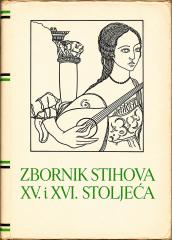
PSHK #5: Zbornik stihova XV. i XVI. stoljeća
An anthology of 15th- and 16th-century Croatian poetry, featuring major Renaissance writers including Džore Držić, Šiško Menčetić, Marko Marulić, Hanibal Lucić and Petar Hektorović.
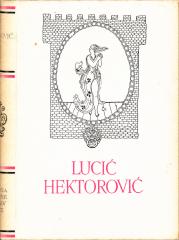
PSHK #7: Hanibal Lucić / Petar Hektorović: Skladanja izvarsnih pisan razlicih / Ribanje i ribarsko prigovaranje i razlike stvari ine
Love poetry and Robinja by Hanibal Lucić join Petar Hektorović’s fishing voyage in this collection of Hvar Renaissance writing, complemented by verse epistles, critical studies and a glossary.