Ranko Marinković
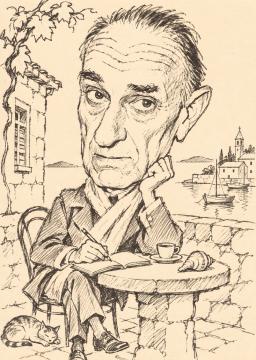
Ranko Marinković (Vis, 22 February 1913 – Zagreb, 28 January 2001) was a Croatian novelist, short-story writer, playwright and essayist, and a major figure of Croatian modernism. Mediterranean settings, irony, grotesque humour and close attention to fear and human vulnerability characterise his work.
Educated in Split and Zagreb, he was interned at Ferramonti in Italy during the Second World War and later lived in the El Shatt refugee camp. After the war, he directed the drama department of the Croatian National Theatre in Zagreb from 1946 to 1950 and taught dramaturgy at Zagreb’s theatre academy. He became a full member of the Yugoslav Academy, now the Croatian Academy of Sciences and Arts, in 1983.
His play Albatros premiered in 1939, and early fiction appeared in Proze (1948). The collection Ruke (1953) established him as a leading short-story writer. Stories such as Zagrljaj examine storytelling itself, the writer’s relationship with fictional characters and the boundary between art and reality.
Glorija, first performed in 1955 and published in 1956, uses the fate of a former circus performer to explore emotion, faith and institutional authority. His central achievement, the novel Kiklop (1965), portrays Zagreb’s intellectual and bohemian circles on the eve of the Second World War. Literary allusions, fragmented narration and black humour convey the individual’s fear of war and annihilation.
Later works include the novels Zajednička kupka (1980) and Never more (1993), and the plays Politeia ili Inspektorove spletke (1977) and Pustinja (1982). His critical and reflective writing appears in Geste i grimase (1951) and Nevesele oči klauna (1986).
Marinković combines linguistic precision and psychological insight with scepticism towards dogmatism. His isolated, contradictory characters expose fragile identities and the distance between professed ideals and everyday conduct.
Naslovi u ponudi
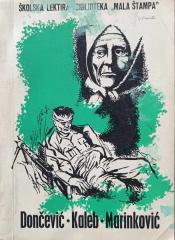
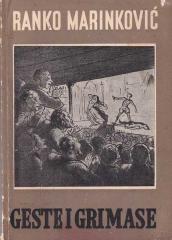
Geste i grimase
A collection of theater essays and criticism in which Ranko Marinković analyzes great works and authors of world and Croatian theater, reflecting on art, acting, and dramatic expression.

Glorija: mirakl u šest slika
"Gloria" is a drama by Ranko Marinković, first performed in 1955, which explores the complex themes of sin, redemption, human nature and the relationship between faith and passion through strong symbolism and deep philosophical motifs.
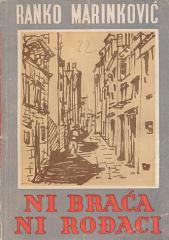
Ni braća ni rođaci
A novella of family rivalry, wounded pride and revenge. Within an insular island community, old humiliations become an obsession, while familiarity gives way to distrust and hostility.
Ruke
Acht Erzählungen über Einsamkeit, Liebe, Tod und schöpferische Arbeit. Mit Ironie und Groteske enthüllt Marinković Eitelkeit, verborgene Leidenschaften und die Verletzlichkeit menschlicher Beziehungen.
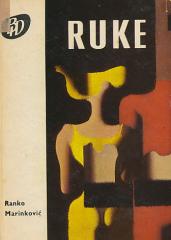
Ruke
Die Hauptfiguren dieser Geschichte, nach der die gesamte Sammlung benannt ist, sind die linke und die rechte Hand. Sie befinden sich auf dem Rücken des Mannes, wobei die linke Hand in der rechten liegt, von der sie sich im Charakter unterscheidet, weshalb