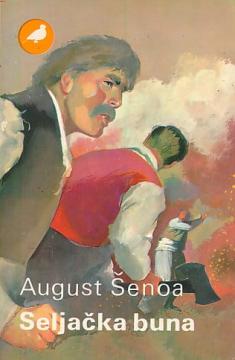
Seljačka buna

Seljačka buna

August Šenoa

Šenos historischer Roman „Bauernaufstand“ ist eine getreue Rekonstruktion des berühmten kroatischen Bauernaufstands im Jahr 1573 und aller Ereignisse, die ihm vorausgingen.

Im Zentrum des Interesses des Autors steht der Konflikt zwischen den Adligen Franja Tahij und Uršula Heningova um den Besitz der Güter Susjedgrad und Stubica, der vor dem Hintergrund der ständigen türkischen Bedrohung zu einer der tragischsten Episoden in der kroatischen Geschichte führte.

Editor
Nasko Frndić
Dimensions
16.5 x 11 cm
Pages
387
Publisher
Zora, Zagreb, 1968.
 
Latin alphabet. Paperback.
Language: Croatian.

Multiple copies are available

Copy number 1

Condition:Used, excellent condition
Damages or inconvenience notice:
  • Spuren von Patina

Copy number 2

Condition:Used, excellent condition

Copy number 3

Condition:Used, very good condition
Damages or inconvenience notice:
  • Tragovi patine
 

Are you interested in another book? You can search the offer using our search engine or browse books by category.

You may also be interested in these titles

Seljačka buna

Seljačka buna

August Šenoa
Rad, 1964.
Serbian. Latin alphabet. Paperback.
2.98 - 2.99
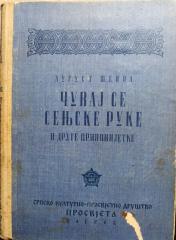
Čuvaj se Senjske ruke

Čuvaj se Senjske ruke

August Šenoa
SKD Prosvjeta, 1951.
Serbian. Cyrillic alphabet. Hardcover.
9.99
Čuvaj se Senjske ruke

Čuvaj se Senjske ruke

August Šenoa
Zora, 1962.
Croatian. Latin alphabet. Paperback.
4.88 - 4.99
Argonauti: pričanja siromašnih ljudi

Argonauti: pričanja siromašnih ljudi

Slavko Batušić

The book shows the life of two poor friends, unemployed clerks Dominik Vrabec and Martin Mak, who wander in search of work and bread in the difficult interwar years, carrying the burden of misery, longing and a little man.

Matica hrvatska, 1936.
Croatian. Latin alphabet. Hardcover.
12.36
Mladost Tome Ivića

Mladost Tome Ivića

Mate Ujević

The Youth of Toma Ivić (1928) is an autobiographical novel by Mate Ujević. It depicts the spiritual wanderings, youthful crises, and final religious conversion of a sensitive young man in the Herzegovina-Dalmatia setting.

Hrvatsko književno društvo Sv. Jeronima, 1928.
Croatian. Latin alphabet. Hardcover.
11.32
Veliko proljeće

Veliko proljeće

Stjepko Vrtar

The Great Spring (1933) depicts the awakening and rebirth of the Croatian village and the common man in the interwar period – a symbolic depiction of the national and social spring, the peasant movement, and the personal maturation of the main character.

Matica hrvatska, 1933.
Croatian. Latin alphabet. Hardcover.
7.26