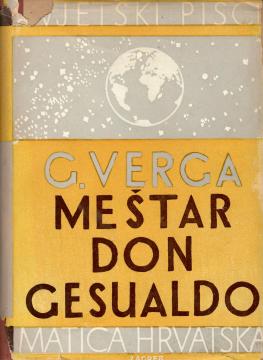
Meštar Don Gesualdo

Meštar Don Gesualdo

Giovanni Verga

The novel is an important representative of verismo, Italian realism, and depicts the lives of people from the south of Italy, especially the conflicts between the poor peasantry and the decaying aristocracy.

Gesualdo Motta, nicknamed the Master, is a modest and hardworking stonecutter from a village in Sicily. Through hard work and persistence, he manages to create considerable wealth and becomes a respectable land owner. Although his wealth brings him status, he faces the scorn of those around him because of his "lower roots" and social rise. Despite this, Gesualdo wants to gain the recognition and status that society reluctantly acknowledges.

In order to become accepted among the aristocracy, he marries Bianca Trao, a noblewoman from an impoverished noble family. However, their marriage is not a happy one; Bianca never loves him, and Gesualdo realizes over time that society will never truly accept him. Although he becomes part of the nobility, society still looks down on him and disparages him as a "peasant rich man".

Gesualdo's health deteriorates under the pressure of work and caring for his family, and his relationship with his daughter Isabella also deteriorates. Isabella ends up marrying a nobleman, but even that marriage is not a happy one because her husband spends Gesualdo's wealth without any gratitude or respect. Gesualdo dies abandoned and alienated, aware that his sacrifice and effort were in vain.

The novel "Master Don Gesualdo" depicts the tragic life of a man who, despite his success and wealth, remains a social outsider. Verga criticizes social norms through the character of Gesualdo, pointing out that material success cannot overcome social barriers and human prejudices.

Titel des Originals
Mastro-don Gesualdo
Übersetzung
Ivo Frangeš
Editor
Ivo Hergešić
Titelseite
Ljubo Babić
Maße
21 x 15 cm
Seitenzahl
349
Verlag
Matica hrvatska, Zagreb, 1947.
 
Latein Schrift. Fester Einband mit Schutzumschlag.
Sprache: Kroatisch.

Angeboten wird ein Exemplar

Zustand:Gebraucht, in sehr gutem Zustand
Nachteile/Unannehmlichkeiten:
  • Damaged book cover
Reduzierter Preis: 8,425,89
Der Rabatt von 30 % gilt bis zum 14.08.2026 23:59 Uhr
Zum Warenkorb hinzugefügt!
 

Interessieren Sie sich für ein anderes Buch? Sie können das Angebot über unsere Suchmaschine suchen und finden oder Bücher nach Kategorien durchsuchen.

Diese Titel könnten Sie auch interessieren

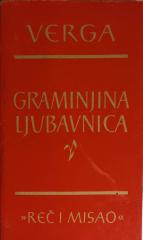
Graminjina ljubavnica

Graminjina ljubavnica

Giovanni Verga
Rad, 1964.
Serbisch. Latein Schrift. Taschenbuch.
0,99
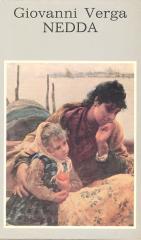
Nedda

Nedda

Giovanni Verga
Logos, 1984.
Kroatisch. Latein Schrift. Fester Einband mit Schutzumschlag.
4,76 - 5,32
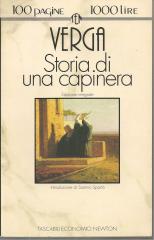
Storia di una Capinera

Storia di una Capinera

Giovanni Verga
Grandi Tascabili Economici Newton, 1993.
Italienisch. Latein Schrift. Taschenbuch.
3,99
Djevojka s Leicom

Djevojka s Leicom

Helena Janeczek

The novel is a kaleidoscopic, polyphonic account of the life of Gerda Taro (née Gerda Pohorylle, 1910–1937), the first female war photographer to die on the battlefield. A must-read for fans of historical fiction about strong women and anti-fascism.

Naklada Ljevak, 2020.
Kroatisch. Latein Schrift. Fester Einband mit Schutzumschlag.
13,72
Sandokan

Sandokan

Emilio Salgari, Renato Caporali

A free prose adaptation by Renato Caporali based on the screenplay of the Italian mini-series Sandokan (1976, directed by Sergio Sollim, starring Kabir Bedi). It is based on the novel of the same name by Emilio Salgari (I pirati della Malesia, 1896).

Globus, 1977.
Kroatisch. Latein Schrift. Hardcover.
14,38
Kronika o siromašnim ljubavnicima

Kronika o siromašnim ljubavnicima

Vasco Pratolini

In Florence 1925–1926, in the poor Via del Corno, the residents live in love, poverty and fear. The arrival of fascism destroys the community: lovers fight, some die from violence, but popular solidarity survives.

Sveučilišna naklada Liber (SNL), 1982.
Kroatisch. Latein Schrift. Fester Einband mit Schutzumschlag.
3,76