Povijest #4: Rimsko carstvo

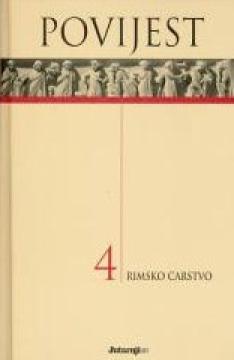
Povijest #4: Rimsko carstvo

Transition from Roman Republic to Empire: The Roman Republic weakens due to internal strife and civil wars. The First Triumvirate (Caesar, Pompey, Crassus) undermines the power of the Senate. Caesar's dictatorship and assassination (44 BC) lead to the rise of Octavian, who in 27 BC becomes Augustus, the first Roman emperor, establishing a principate.

Development and height of the Empire: Augustus reorganizes Rome, introducing standardized money, taxes, bureaucracy, a professional army, police, and firefighters. He supports the arts (Virgil, Horace) and uses plays for propaganda. The empire reaches its peak under Trajan (117), conquering Armenia and Mesopotamia. Rome rules over Hellenistic lands and Celtic regions, spreading Roman culture, law, and architecture. Hellenistic influence is seen in art, while Roman infrastructure (roads, aqueducts) supports expansion.

Society, culture and religion: Roman society was stratified, with patricians, plebeians and slaves. Christianity spread, despite early persecution, becoming a key factor in the later Empire. Cultural achievements include Roman law and architecture (Colosseum, Pantheon).

The Fall of the Empire: After Trajan, the Empire faced crises: economic problems, internal conflicts and barbarian incursions. In 395, Theodosius divided the Empire into Western and Eastern, weakening the West, which collapsed in 476 with the overthrow of Romulus Augustulus. The Eastern Empire (Byzantine) continued until 1453. Roman legacy shaped Western institutions.

Titel des Originals
L'Impero romano
Editor
Enrico Cravetto, Damir Salopek
Illustrationen
Adom Macheroni
Maße
22 x 14 cm
Seitenzahl
671
Verlag
Europapress holding, Zagreb, 2007.
 
Latein Schrift. Hardcover.
Sprache: Kroatisch.
ISBN
978-9-53300-038-1

Angeboten wird ein Exemplar

Zustand:Gebraucht, in ausgezeichnetem Zustand
Zum Warenkorb hinzugefügt!
 

Interessieren Sie sich für ein anderes Buch? Sie können das Angebot über unsere Suchmaschine suchen und finden oder Bücher nach Kategorien durchsuchen.

Diese Titel könnten Sie auch interessieren

Drevna Kina: Velike civilizacije 6

Drevna Kina: Velike civilizacije 6

Edward L. Shaughnessy

Knjiga predstavlja umjetnička i stvaralačka dostignuća drevne Kine od pronalaska pisma pa sve do doba dinastije Tang.

24 sata, 2008.
Kroatisch. Latein Schrift. Hardcover.
4,76
Otkriće Troje

Otkriće Troje

Vojtech Zamarovsky

"The Discovery of Troy" by Vojtěch Zamarovsky is a book that describes in detail the history of the discovery of the ancient city of Troy, with special emphasis on the archaeological research of Heinrich Schliemann.

Epoha, 1964.
Kroatisch. Latein Schrift. Fester Einband mit Schutzumschlag.
8,565,99
Kultura neandertalaca: Čuvari drevne mudrosti

Kultura neandertalaca: Čuvari drevne mudrosti

Britanski psiholog i istraživač u ovoj snažno dokumentiranoj knjizi tvrdi da su neandertalci bili nosioci starije, moćnije i duhovno bogatije kulture od kromanjonaca („modernog“ čovjeka), i da je upravo njihova tradicija temelj cijele kasnije civilizacije

Stari grad, 2006.
Kroatisch. Latein Schrift. Hardcover.
14,22 - 14,28
Uništenje Atlantide: Uvjerljiv dokaz o iznenadnoj propasti legendarne civilizacije

Uništenje Atlantide: Uvjerljiv dokaz o iznenadnoj propasti legendarne civilizacije

Frank Joseph

Frank Joseph (bürgerlicher Name Francis Joseph Collin) präsentiert in diesem Buch die umfassendste moderne Verteidigung von Platons Atlantis als einer realen historischen Zivilisation, die um 1628–1600 v. Chr. in einer Katastrophe unterging.

Stari grad, 2004.
Kroatisch. Latein Schrift. Hardcover.
15,22 - 15,32
Arktička pradomovina Veda

Arktička pradomovina Veda

Bal Gandahar Tilak

Das Buch „Die arktische Heimat der Veden“ (1903) des indischen Gelehrten Tilak stellte die Hypothese auf, dass die alten Arier, die Autoren des Rigveda, aus der Arktis stammten. Obwohl umstritten, bleibt das Buch für die Erforschung vedischer Texte und de

NIRO Književne novine, 1987.
Serbisch. Latein Schrift. Taschenbuch.
17,56
Kraj vremena: Revizija proročanstva Maya

Kraj vremena: Revizija proročanstva Maya

Adrian Gilbert

Der britische Autor Adrian Gilbert (Mitautor von „Die Maya-Prophezeiungen“ aus dem Jahr 1995) bietet in „Das Ende der Zeit“ die gründlichste und nüchternste moderne Interpretation des Maya-Kalenders und der sogenannten „Prophezeiung von 2012“ und lehnt di

Stari grad, 2009.
Kroatisch. Latein Schrift. Hardcover.
18,22 - 18,26