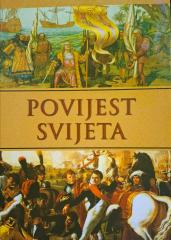
Povijest #4: Rimsko carstvo

Povijest #4: Rimsko carstvo

Transition from Roman Republic to Empire: The Roman Republic weakens due to internal strife and civil wars. The First Triumvirate (Caesar, Pompey, Crassus) undermines the power of the Senate. Caesar's dictatorship and assassination (44 BC) lead to the rise of Octavian, who in 27 BC becomes Augustus, the first Roman emperor, establishing a principate.

Development and height of the Empire: Augustus reorganizes Rome, introducing standardized money, taxes, bureaucracy, a professional army, police, and firefighters. He supports the arts (Virgil, Horace) and uses plays for propaganda. The empire reaches its peak under Trajan (117), conquering Armenia and Mesopotamia. Rome rules over Hellenistic lands and Celtic regions, spreading Roman culture, law, and architecture. Hellenistic influence is seen in art, while Roman infrastructure (roads, aqueducts) supports expansion.

Society, culture and religion: Roman society was stratified, with patricians, plebeians and slaves. Christianity spread, despite early persecution, becoming a key factor in the later Empire. Cultural achievements include Roman law and architecture (Colosseum, Pantheon).

The Fall of the Empire: After Trajan, the Empire faced crises: economic problems, internal conflicts and barbarian incursions. In 395, Theodosius divided the Empire into Western and Eastern, weakening the West, which collapsed in 476 with the overthrow of Romulus Augustulus. The Eastern Empire (Byzantine) continued until 1453. Roman legacy shaped Western institutions.

Original title
L'Impero romano
Editor
Enrico Cravetto, Damir Salopek
Illustrations
Adom Macheroni
Dimensions
22 x 14 cm
Pages
671
Publisher
Europapress holding, Zagreb, 2007.
 
Latin alphabet. Hardcover.
Language: Croatian.
ISBN
978-9-53300-038-1

No copies available

The last copy was sold recently.
 

Are you interested in another book? You can search the offer using our search engine or browse books by category.

You may also be interested in these titles

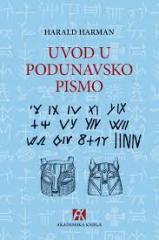
Uvod u podunavsko pismo

Uvod u podunavsko pismo

Harald Haarman

Introduction to the Danubian Script by Harald Haarmann (2010) is the first systematic introduction to the oldest writing system in Europe – the Old European or Danubian script (c. 5300–3200 BC), which emerged within the framework of the Danubian Civilizat

Akademska knjiga, 2022.
Serbian. Latin alphabet. Hardcover.
20.00 €
Prije potopa: Dokaz da je biblijski potop bio stvaran događaj

Prije potopa: Dokaz da je biblijski potop bio stvaran događaj

Ian Wilson

British historian Ian Wilson (known for his books on the Shroud of Turin and Jesus) offers the most thorough defense of the thesis that the biblical flood was a real historical event, not just a myth, in his work Before the Flood.

Stari grad, 2007.
Croatian. Latin alphabet. Hardcover.
16.2211.40 - 16.2812.18 €
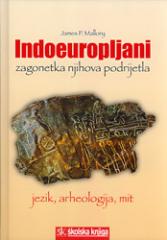
Indoeuropljani: Jezik, arheologija i mit

Indoeuropljani: Jezik, arheologija i mit

James P. Mallory

Archaeologist J. P. Mallory's seminal work explores the origins of Indo-Europeans, combining linguistics, archaeology, and mythology to solve one of history's greatest mysteries.

Školska knjiga, 2006.
Croatian. Latin alphabet. Hardcover.
38.74 €
Povijest svijeta

Povijest svijeta

Jochen Bleicken

A synthetic overview of classical antiquity by a renowned German historian. Bleicken analyzes the rise and structures of the Greek and Roman worlds, their political systems, culture, and influence on European history.

Marjan tisak, 2005.
Croatian. Latin alphabet. Hardcover.
8.25 €
Kraj vremena: Revizija proročanstva Maya

Kraj vremena: Revizija proročanstva Maya

Adrian Gilbert

British author Adrian Gilbert (co-author of The Mayan Prophecies from 1995) in The End of Time offers the most thorough and sober modern interpretation of the Mayan calendar and the so-called "2012 prophecy", completely rejecting New Age hysteria.

Stari grad, 2009.
Croatian. Latin alphabet. Hardcover.
18.2212.75 - 18.2412.77 €
Povijest svijeta: od najstarijeg doba do godine 1940.

Povijest svijeta: od najstarijeg doba do godine 1940.

Marko Vunić
Hrvatsko književno društvo Sv. Jeronima, 1940.
Croatian. Latin alphabet. Hardcover.
9.72 €