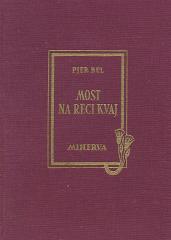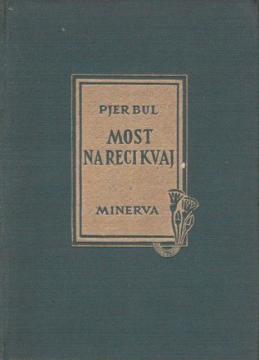
Most na reci Kvaj / Dželat

Most na reci Kvaj / Dželat

Pierre Boulle

The Bridge on the River Kwai (1952) is a famous story about British prisoners who, under pressure from the Japanese, build a bridge in the jungle. The Executioner (1954) is a philosophical novella about a Chinese executioner who becomes a victim of his ow

The Bridge on the River Kwai is Boulle's most famous work (based on the Oscar-winning film by David Lean). The novel is based on the author's wartime experience in Asia. It depicts British prisoners in a Japanese camp in Burma who are forced by their commander, Colonel Nicholson, to build a perfect bridge over the River Kwai. The novel subtly explores themes of military honor, the absurdity of war, collaboration, and fanaticism. Boulle masterfully shows how a British officer, in the name of discipline and pride, helps the enemy, while the Japanese becomes almost sympathetic in his rigidity. The work is an ironic parable about war and human nature.

The Executioner is a short philosophical novella set in ancient China. The main character is a professional executioner who has been carrying out death sentences for centuries, following a family tradition. When the system he has served his entire life condemns him to death, he becomes a victim of his own role. The novel is a powerful existential parable about responsibility, justice, violence, and the meaninglessness of human destiny. Here Boulle demonstrates an extraordinary ability to pose profound philosophical questions through a simple story.

Both works are characterized by precise style, irony, and moral ambiguity – Boulle never judges directly, but rather makes the reader think. The Minerva edition has combined these two novels into one book, which is a frequent occurrence with Boulle, as both share similar themes of absurdity and human tragicomedy.

Titel des Originals
Le Pont de la rivière Kwaï / Le Bourreau
Übersetzung
Zorica Mišković
Editor
Tanasije Mladenović
Illustrationen
Olivera Mitrašinović
Titelseite
Stevan Vujkov
Maße
20 x 14,5 cm
Seitenzahl
262
Verlag
Minerva, Subotica, 1959.
 
Latein Schrift. Hardcover.
Sprache: Serbisch.

Angeboten wird ein Exemplar

Zustand:Gebraucht, in ausgezeichnetem Zustand
Zum Warenkorb hinzugefügt!
 

Interessieren Sie sich für ein anderes Buch? Sie können das Angebot über unsere Suchmaschine suchen und finden oder Bücher nach Kategorien durchsuchen.

Diese Titel könnten Sie auch interessieren

Most na reci Kvaj / Dželat

Most na reci Kvaj / Dželat

Pierre Boulle

Roman Most na rijeci Kwai Pierrea Boullea klasično je antiratno djelo koje istražuje apsurde i tragedije rata. Radnja se odvija tijekom Drugog svjetskog rata u japanskom logoru za ratne zarobljenike na Tajlandu.

Minerva, 1968.
Serbisch. Latein Schrift. Hardcover.
3,42
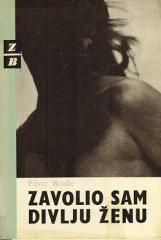
Zavolio sam divlju ženu

Zavolio sam divlju ženu

Pierre Boulle

Roman originalnog naziva La Planete des singes po kojem je 1968. snimljen film Planet majmuna.

Epoha, 1965.
Kroatisch. Latein Schrift. Fester Einband mit Schutzumschlag.
5,98
Istok i Zapad

Istok i Zapad

Gerald Green

Green u romanu Istok i Zapad (1986.) tka epsku priču o ljubavi i ratu, ispreplićući živote običnih ljudi s velikim povijesnim događajima. Roman je snažna freska o ratu, ali i o neuništivom duhu koji traži svjetlo usred tame.

August Cesarec, 1990.
Kroatisch. Latein Schrift. Taschenbuch.
Das Buch besteht aus zwei Bänden
7,42
Romeo, Julija i tama

Romeo, Julija i tama

Jan Otčenášek

U okupiranom Pragu 1942. student Pavel skriva ranjenu Židovku Hanu. U opasnosti i strahu među njima se rađa snažna ljubav. Gestapo ih otkriva, Pavel umire mučen pod istragom, a Hana preživljava holokaust noseći sjećanje na njihovu tragičnu romansu.

Svjetlost, 1965.
Serbisch. Latein Schrift. Taschenbuch.
3,26
Pokošeno polje

Pokošeno polje

Branimir Ćosić

Pokošena polja (1933.) predstavlja vrhunac i labudovu pjesmu jednog prerano ugašenog života – pisac je roman završio samo pet mjeseci prije smrti od tuberkuloze, u trideset i prvoj godini.

Svjetlost, 1961.
Serbisch. Latein Schrift. Hardcover.
Das Buch besteht aus zwei Bänden
5,34
Deobe

Deobe

Dobrica Ćosić

Deobe su roman o tragičnoj podjeli Srba na četnike i partizane tijekom Drugog svjetskog rata. Nagrađen NIN-ovom nagradom, dio je šire epske trilogije, inspiriran Ćosićevim iskustvima i povijesnim dokumentima.

Prosveta, 1963.
Kroatisch. Latein Schrift. Fester Einband mit Schutzumschlag.
13,74