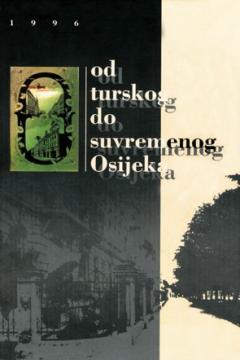
Od turskog do suvremenog Osijeka
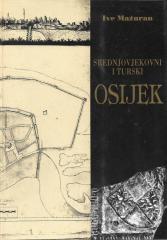
The monograph From Turkish to Modern Osijek is the second book in a two-volume history of Osijek. It covers the period from the liberation from Turkish rule in 1687 to the present day, i.e. the last 300 years of the development of the city on the Drava Ri
The book begins with the Baroque period: after the Great Turkish War, Osijek becomes a key fortress of the Habsburg Monarchy. Under the administration of the Military Frontier, the city is quickly populated – with immigrants from Europe (Germany, Hungary, Croats) – and develops into a commercial center of Slavonia. The authors describe in detail the urban plan of the Baroque Fortress, the construction of the Eugene of Savoy fortress, and the economic boom through the grain and livestock trade.
In the 19th century, Osijek flourishes as the "Athens of Slavonia". The abolition of the Military Frontier in 1881 brings civil administration, industrialization (mills, breweries, ironworks) and a cultural boom. The city becomes the center of the Croatian Renaissance: Dalmatinac, Strossmayer work here, and literature (Mažuranić), music and theater flourish. Political conflicts between Croats and Hungarians, and the national awakening, shape the city's identity. The book emphasizes the role of Osijek in the Illyrian Movement and the Croatian Parliament.
The twentieth century brought dramatic changes. World War I brought down the Austro-Hungarian monarchy, and Osijek entered the Kingdom of Serbs, Croats, Croats and Slovenes (later Yugoslavia) as an industrial and cultural center. The interwar period saw urban expansion – the construction of bridges, schools and parks – but also economic crises. World War II and the partisan struggle marked resistance to the occupiers, with Osijek as a key hub. Socialist Yugoslavia brought industrialization (hemp, food), mass housing and cultural development, but also political tensions. The book ends with the Homeland War of 1991, emphasizing the resistance in Slavonia, destruction and reconstruction, and Osijek as a symbol of Croatian independence.
In addition to political and economic history, the work addresses social topics: demography (multiethnic composition), health, education and art. Rich illustrations and archival materials make it an invaluable source for researchers. As a "brilliant synthesis", Mažurana's work illuminates how Osijek went from a border fortress to a modern European city, preserving the Slavonian spirit.
Es werden zwei Exemplare angeboten