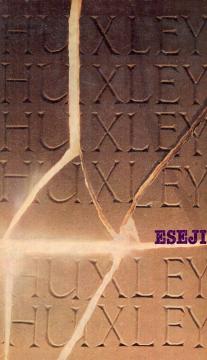
Eseji: Vrata percepcije / Pakao i raj / Ludost, pakost, žalost / Najčudnija znanost

Eseji: Vrata percepcije / Pakao i raj / Ludost, pakost, žalost / Najčudnija znanost

Aldous Huxley

"Essays" by Aldous Huxley is a collection of four key texts that reveal the depth of Huxley's thinking on consciousness, art, science, and literature.

The first essay, "The Doors of Perception" (1954), describes Huxley's psychoactive experience with mescaline. The author reveals how the drug breaks down the mind's filters, opening "doors of perception" to a metaphysical reality, where everyday objects take on a transcendent depth. Huxley connects this to mystical traditions and art, criticizing the materialistic understanding of the mind.

The sequel, "Hell and Heaven" (1956), explores extreme visions of the mind: paradisiacal hallucinations and hellish nightmares in the history of religion, art, and drug-induced states. Huxley analyzes how artists such as Blake and Van Gogh achieve such states, warning of the dangers and potential of expanded consciousness.

In "Madness, Malice, Sorrow," Huxley discusses pathological aspects of the human psyche—madness as an escape from reality, malice as a destructive force, and sorrow as existential pain. The essays call for compassion and understanding of these states through philosophy and literature.

"The Strangest Science" deals with the limits of empirical science, exploring parapsychology, mysticism and unconventional phenomena as a "strange" branch of knowledge that transcends materialism.

The final text, "Scientific Typology in Huxley's Novels of Ideas" (author Matej Mužina), critically analyzes Huxley's works such as "The Wonderful New World" and "The Island", classifying them according to scientific paradigms and ideational structures, emphasizing predictions about technology and society.

Titel des Originals
Collected Essays
Übersetzung
Maja Šoljan, Tomislav Pisk, Davor Slaming
Editor
Franjo Profeta
Illustrationen
Petar Dabac
Titelseite
Nenad Dogan
Maße
21 x 13 cm
Seitenzahl
208
Verlag
August Cesarec, Zagreb, 1980.
 
Latein Schrift. Fester Einband mit Schutzumschlag.
Sprache: Kroatisch.

Angeboten wird ein Exemplar

Zustand:Gebraucht, in sehr gutem Zustand
Nachteile/Unannehmlichkeiten:
  • The cover is missing
Zum Warenkorb hinzugefügt!
 

Interessieren Sie sich für ein anderes Buch? Sie können das Angebot über unsere Suchmaschine suchen und finden oder Bücher nach Kategorien durchsuchen.

Diese Titel könnten Sie auch interessieren

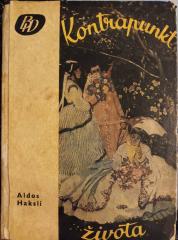
Kontrapunkt života

Kontrapunkt života

Aldous Huxley

Kontrapunkt (1928.) je najduži i najkompleksniji Huxleyev roman, inspiriran muzičkim kontrapunktom, gdje se priča razvija kroz prepletene radnje i paralelne zaplete, naglo prelazeći između likova i tema.

Svjetlost, 1961.
Serbisch. Latein Schrift. Hardcover.
Das Buch besteht aus zwei Bänden
3,26 - 7,99
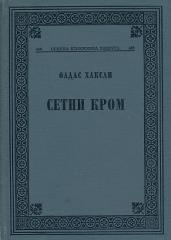
Setni Krom

Setni Krom

Aldous Huxley

Prvi roman Aldousa Huxleyja objavljen 1921. godine

Srpska književna zadruga (SKZ), 1974.
Serbisch. Kyrillisch Schrift. Hardcover.
6,82
Pijanac života: životopis Milana Begovića

Pijanac života: životopis Milana Begovića

Mirko Žeželj
Znanje, 1980.
Kroatisch. Latein Schrift. Taschenbuch.
6,00
Vječni suputnici I-II

Vječni suputnici I-II

Dmitrij Sergejevič Merežkovski

U ovoj dvotomnoj knjizi Merežkovski, kao istinski majstor književnog portreta, dao je portrete svojih književnih uzora i povijesnih ličnosti. Predgovor napisao Nikolaj Fedorov.

Matica hrvatska, 1942.
Kroatisch. Latein Schrift. Hardcover.
Das Buch besteht aus zwei Bänden
18,38
Mrka kapa

Mrka kapa

Aristid Teofanović

Mrka kapa je knjiga kratke proze pisana pod pseudonimom Aristid Teofanović, koji koristi Slobodan Blagojević. Blagojević je poznat i po heteronimu Anhel Antonić (poezija) te drugim djelima pod pravim imenom.

Feral Tribune, 2001.
Kroatisch. Latein Schrift. Taschenbuch.
9,36
Primicanje katastrofa: Propasti koje prijete našem svijetu

Primicanje katastrofa: Propasti koje prijete našem svijetu

Isaac Asimov

Znanstveno-popularno djelo u kojem Asimov, kombinirajući znanstvenu rigoroznost s lucidnim stilom istražuje moguće prijetnje opstanku čovječanstva, sistematizirajući katastrofe prema njihovoj prirodi i vjerojatnosti.

August Cesarec, 1981.
Kroatisch. Latein Schrift. Fester Einband mit Schutzumschlag.
7,46