Povijest #19: Suvremeno doba (1985.-2007.)

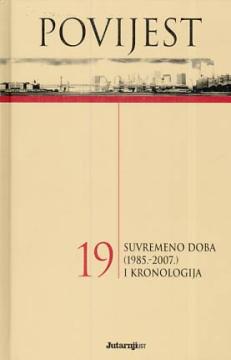
Povijest #19: Suvremeno doba (1985.-2007.)

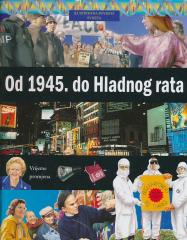
The year 1985 marks the beginning of perestroika in the USSR under Gorbachev, thus beginning the end of the Cold War. The fall of the Berlin Wall in 1989 symbolizes the unification of Europe, while the USSR collapses in 1991, leaving the USA as the sole superpower. The Balkan wars (1991–1999), especially the conflict in Bosnia and Kosovo, reveal ethnic tensions, while the genocide in Rwanda (1994) shocks the world.

The technological revolution is changing life: the Internet is becoming a global network, and mobile phones are a part of everyday life. In 1995, the World Wide Web was born, and companies like Microsoft and Apple defined the digital age. The September 11, 2001, terrorist attacks on New York and Washington trigger the global war on terror, including the invasions of Afghanistan (2001) and Iraq (2003), along with human rights controversies.

Ecological crises are becoming more visible: the Kyoto Protocol (1997) seeks to curb climate change, but resistance from major powers slows progress. Globalization is growing, but it also brings inequalities, while China and India are emerging as economic powers. The Euro is spreading across Europe (2002), and the EU is expanding eastward.

The book, concise and dynamic, captures this era through political, social and cultural prisms, from the collapse of communism to the digital revolution, inviting reflection on a world in transition.

Übersetzung
Jelena Ivičević Desnica
Editor
Ivo Goldstein, Enrico Cravetto
Maße
22 x 14 cm
Seitenzahl
647
Verlag
Europapress holding, Zagreb, 2008.
 
Latein Schrift. Hardcover.
Sprache: Kroatisch.
ISBN
978-9-53300-056-5

Angeboten wird ein Exemplar

Zustand:Ungebraucht
Zum Warenkorb hinzugefügt!
 

Interessieren Sie sich für ein anderes Buch? Sie können das Angebot über unsere Suchmaschine suchen und finden oder Bücher nach Kategorien durchsuchen.

Diese Titel könnten Sie auch interessieren

Zagonetka podunavske civilizacije

Zagonetka podunavske civilizacije

Harald Haarman

Harald Haarmann's book presents the discovery of Europe's oldest highly developed culture (c. 5500–3500 BC), known as the Danube or Old European Civilization, with an emphasis on its writing, art and influence.

Akademska knjiga, 2019.
Kroatisch. Latein Schrift. Taschenbuch.
27,00
Metamorfoze Ruskog Carstva 1721. - 1921.: Geopolitika, ode i narodi

Metamorfoze Ruskog Carstva 1721. - 1921.: Geopolitika, ode i narodi

Andrzej Nowak

A historical study of the transformations of the Russian Empire from Peter the Great to the early USSR, focusing on imperial geopolitics, ideological patterns, and relations with peoples within the empire.

Fortuna d.o.o., 2023.
Kroatisch. Latein Schrift. Hardcover.
35,00
Sloveni u dalekoj prošlosti

Sloveni u dalekoj prošlosti

Valentin V. Sedov

A fundamental archaeological and historical work on the ethnogenesis of the Slavs from the 2nd millennium BC to the middle of the 1st millennium AD. The author reconstructs the origins, culture, and early migrations of the Slavs based on archaeological fi

Akademska knjiga, 2012.
Serbisch. Latein Schrift. Fester Einband mit Schutzumschlag.
32,00
Uvod u podunavsko pismo

Uvod u podunavsko pismo

Harald Haarman

Introduction to the Danubian Script by Harald Haarmann (2010) is the first systematic introduction to the oldest writing system in Europe – the Old European or Danubian script (c. 5300–3200 BC), which emerged within the framework of the Danubian Civilizat

Akademska knjiga, 2022.
Serbisch. Latein Schrift. Hardcover.
20,00
Izabrani Plinijevi listovi

Izabrani Plinijevi listovi

Plinije Stariji

Anthology of Latin Fragments of Pliny the Elder with Croatian Explanations (Golik, 1909) presents ancient views on nature, man and the world, with brief comments for understanding and teaching.

Troškom i nakladom Kr. hrv.-slav.-dalm. zemalj. vlade, 1909.
Latein. Latein Schrift. Taschenbuch.
9,32