Put k Swannu

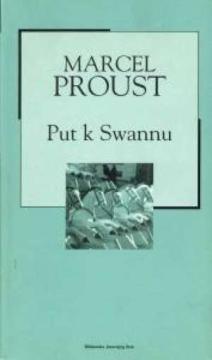
Put k Swannu

Marcel Proust

The Journey to Swann is the first part of the monumental cycle "In Search of Lost Time" (À la recherche du temps perdu), published in 1913. The novel is structured in three parts and deals with the themes of memory, time, and love.

The Journey to Swann is the first part of the monumental cycle "In Search of Lost Time" (À la recherche du temps perdu), published in 1913. The novel is structured in three parts and deals with the themes of memory, time and love.

In the first part, the narrator recalls his childhood in Combray, emphasizing the importance of family routines, feelings and early impressions. The famous motif of the "madeleine" (a cookie dipped in tea) triggers an avalanche of memories that connect the past and the present, indicating the power of unconscious memory.

The central part of the novel is dedicated to the love story of Swann, a member of Parisian high society, and the young woman Odette de Crécy. Despite the fact that Odette is not his ideal of beauty, Swann falls obsessively in love with her. Their relationship, full of jealousy and insecurity, depicts love as an illusion and a form of personal suffering.

In the third part, the narrator describes his own awakening of feelings for Gilberte, the daughter of Swann and Odette, which imitates and announces the more complex love stories that will develop in the rest of the cycle.

"The Way to Swann" explores how time and memory shape our perception of life, and Proust's style is characterized by long sentences, detailed descriptions and introspective analysis. The work is one of the most important achievements of world literature of the 20th century.

In addition to "Combray", two other parts were published in this book: "One Swann Love" and "Place Names: The Name".

Titel des Originals
Du cote de chez Swann
Übersetzung
Zlatko Crnković
Editor
Zlatko Crnković
Maße
21 x 13 cm
Seitenzahl
413
Verlag
Jutarnji list, Zagreb, 2004.
 
Latein Schrift. Fester Einband mit Schutzumschlag.
Sprache: Kroatisch.
ISBN
9-53-716015-7

Weitere Exemplare sind verfügbar

Kopiennummer 1

Zustand:Ungebraucht
Zum Warenkorb hinzugefügt!

Kopiennummer 2

Zustand:Gebraucht, in ausgezeichnetem Zustand
Zum Warenkorb hinzugefügt!

Kopiennummer 3

Zustand:Gebraucht, in ausgezeichnetem Zustand
Zum Warenkorb hinzugefügt!

Kopiennummer 4

Zustand:Gebraucht, in ausgezeichnetem Zustand
Zum Warenkorb hinzugefügt!

Kopiennummer 5

Zustand:Gebraucht, in ausgezeichnetem Zustand
Zum Warenkorb hinzugefügt!
 

Interessieren Sie sich für ein anderes Buch? Sie können das Angebot über unsere Suchmaschine suchen und finden oder Bücher nach Kategorien durchsuchen.

Diese Titel könnten Sie auch interessieren

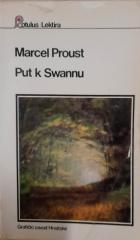
Put k Swannu

Put k Swannu

Marcel Proust
Grafički zavod Hrvatske (GZH), 1981.
Kroatisch. Latein Schrift. Taschenbuch.
9,99 €
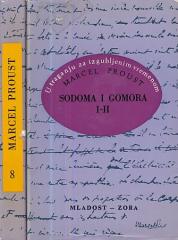
Sodoma i Gomora I-II

Sodoma i Gomora I-II

Marcel Proust
Zora, 1972.
Kroatisch. Latein Schrift. Fester Einband mit Schutzumschlag.
Das Buch besteht aus zwei Bänden
11,26 €
Vrijeme nasilja

Vrijeme nasilja

Jean-Pierre Simon

A Time of Violence (1966) is an anti-war and activist novel by French writer Jean-Pierre Simon, a lesser-known author from the mid-20th century, whose work bears traces of leftist literature of the 1930s and 1940s.

Svjetlost, 1965.
Kroatisch. Latein Schrift. Taschenbuch.
2,46 €
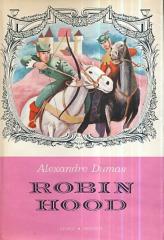
Robin Hood

Robin Hood

Alexandre Dumas

Dumas portrays Robin Hood not only as a bandit who helps the poor, but also as a heroic fighter for justice and a symbol of resistance to feudal injustice.

Epoha, 1966.
Kroatisch. Latein Schrift. Fester Einband mit Schutzumschlag.
4,26 - 4,82 €
Za ljubav sina

Za ljubav sina

Herve Bazin

An intimate, autobiographical drama about fatherhood, guilt, and complex family relationships. The main character is Daniel, a middle-aged widower who is raising three children alone: ​​twins (an older son and a daughter) and the youngest son Bruno.

Svjetlost, 1965.
Kroatisch. Latein Schrift. Taschenbuch.
2,76 €
U traganju za izgubljenim vremenom 9: Zatočenica 1

U traganju za izgubljenim vremenom 9: Zatočenica 1

Marcel Proust

Der Gefangene ist eine Darstellung des Lebens in der Albertina. Die Liebe ist einseitig, aber der Protagonist hat nicht die Kraft, die Beziehung zu beenden. Bergotte und Swann sterben, und nach einem Streit mit Albertine bemerkt er eines Morgens, dass sie

Mladost, 1972.
Kroatisch. Latein Schrift. Fester Einband mit Schutzumschlag.
5,00 €