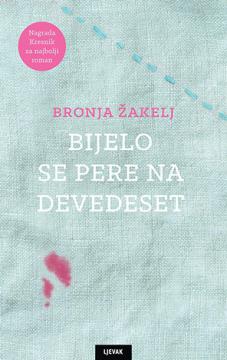
Bijelo se pere na devedeset
Der autobiografische Roman „White Washed at Ninety“ ist eine ergreifende und bewegende literarische Geschichte über den Umgang mit Krankheit, Vergänglichkeit und Ängsten. Es ist auch eine Geschichte über die Liebe – zwischen Tochter und Mutter, Bruder und
Von den ersten Seiten des Romans an reisen wir in Begleitung des Mädchens Bronja in die siebziger und achtziger Jahre des letzten Jahrhunderts, wo sie uns ihre Familie vorstellt: die verehrte Mutter Mita, den Vater Janez, den vier Jahre jüngeren Bruder Rok und Dada , Großmutter mütterlicherseits. Diese kleine Gemeinschaft lebt in Ljubljana, wo die Onkel und Tanten von Bronji und Roko ebenfalls mit der Familie befreundet sind. Das Gefühl, das in diesem kleinen Haushalt vorherrscht, ist die Nähe, insbesondere die zwischen der Erzählerin Bronja und ihrer Mutter, an die sich dieses Werk richtet. Die helle und verspielte Zeit der Kindheit ist die Ruhe vor dem Sturm, denn über der ganzen Familie haben sich die dunklen Wolken des Todes eingenistet. Bronjas Welt wird durch die Diagnose ihrer Mutter blitzschnell erschüttert.
Als Vierzehnjährige befindet sich Bronja im Zentrum des Strudels – alt genug, um zu verstehen, was passiert, aber nicht alt genug, um Einfluss auf die Situation zu nehmen. „White Washes at Ninety“ ist ein aufschlussreicher Roman über die Erfahrung von Krankheit und Verlust, die Zerbrechlichkeit zwischenmenschlicher Beziehungen, den Kampf ums Leben, Hoffnung und Hoffnungslosigkeit, Angst, Leid und die Suche nach einem Lichtblick in völliger Dunkelheit.
„White Wash at Ninety“ ist ein schockierend humorvoller und inspirierender Roman, der die Lebensgeschichte des Erzählers beschreibt, der in den 1970er und 1980er Jahren aufgewachsen ist. Die Welt ihrer Kindheit besteht aus ihrer Familie, der Sendung Sea and Sailors, Gavrilović und der Übertragung der Olympischen Spiele in Sarajevo. Aber während wir über das oben Gesagte sprechen, ist ein autobiografischer Roman in erster Linie eine Geschichte über das Erwachsenwerden, den Umgang mit Verlust und Krankheit, eine Geschichte über die Zähmung von Angst und alles, was wir nicht sehen wollen, bis wir unweigerlich damit konfrontiert werden.
Nema primjeraka u ponudi
Poslednji primjerak je nedavno prodan.