Gospodarstvo Osijeka 1196. – 1996.

Gospodarstvo Osijeka 1196. – 1996.

The book presents a comprehensive overview of the economic development of Osijek over eight centuries. The work is based on historical sources and scientific analyses, providing insight into economic conditions from the Middle Ages to the modern era.

The book begins with the earliest records of Osijek from 1196, describing its position as a trading and craft center on important traffic routes along the Danube. The author covers the periods under Hungarian, Ottoman and Habsburg rule in detail, emphasizing the importance of agriculture, trade and crafts. Special attention is paid to the 18th and 19th centuries, when Osijek became a significant economic center with the development of industry, especially textiles, food and metal. Đidara emphasizes the role of infrastructure, such as the construction of a railway and a port, in the modernization of the city.

In the 20th century, the book covers economic challenges during the world wars, the socialist period and the transition after Croatia gained independence. In particular, it analyzes industrial development in Yugoslavia and the impact of the 1991–1995 war on Osijek's economy. Đidara also discusses the potential for future development, including tourism and agriculture.

The book is structured chronologically, with an emphasis on empirical data, statistics and archival sources, making it a valuable resource for historians and economists. Although the focus is on Osijek, the work provides insight into the broader regional context of eastern Croatia. The style is academic, yet accessible, with the aim of preserving the historical memory of the city.

Editor
Slavko Singer
Titelseite
Mane Medić
Maße
24,5 x 20 cm
Seitenzahl
327
Verlag
Gradsko poglavarstvo grada Osijeka, Osijek, 1998.
 
Auflage: 1.000 Exemplare
 
Latein Schrift. Hardcover.
Sprache: Kroatisch.

Angeboten wird ein Exemplar

Zustand:Gebraucht, in ausgezeichnetem Zustand
Zum Warenkorb hinzugefügt!
 

Interessieren Sie sich für ein anderes Buch? Sie können das Angebot über unsere Suchmaschine suchen und finden oder Bücher nach Kategorien durchsuchen.

Diese Titel könnten Sie auch interessieren

A. G. Matoš: In memoriam o 20-godišnjici pjesnikove smrti

A. G. Matoš: In memoriam o 20-godišnjici pjesnikove smrti

Antun Barac, Milan Ogrizović, Boža S. Nikolajević, Zdenko Vernić, Tin Ujević, Antun Branko Šimić,...

Spomen-zbornik objavljen 1934. godine u nakladi Ljube Wiesnera (Wiesnerova biblioteka, knj. 1). Urednički i autorski predvodi je Antun Barac, a surađuju Milan Ogrizović, Tin Ujević, Ljubo Weisner i drugi hrvatski književnici i kritičari.

Naklada Ljube Wiesnera i Roka Matulića, 1934.
Kroatisch. Latein Schrift. Taschenbuch mit Einband.
9,24
Liburnijske teme 8: Brseč i Brešćina

Liburnijske teme 8: Brseč i Brešćina

"Liburnian Topics" represent a valuable serial publication (proceedings) initiated by the Chair of the Čakavian Parliament in Opatija with the aim of researching and preserving the historical, cultural and natural heritage of the Liburnian region.

Čakavski sabor, 1994.
Kroatisch. Latein Schrift. Taschenbuch.
12,36
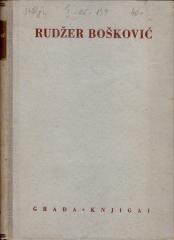
Rudžer Bošković: Građa, knjiga I

Rudžer Bošković: Građa, knjiga I

Mirko Deanović, Josip Torbarina, Branimir Truhelka

The collection of works on Ruđer Bošković includes his letters, literary connections with the English, and biographical and scientific contributions. It is an important source for studying the life and work of the great scientist.

Jugoslavenska akademija znanosti i umjetnosti (JAZU), 1950.
Kroatisch. Latein Schrift. Hardcover.
16,74
Ukrajinski Karpati: Etnogeneza, arheologija, etnologija

Ukrajinski Karpati: Etnogeneza, arheologija, etnologija

The collection is an interdisciplinary bridge between Ukrainian and Croatian science, encouraging comparative research on Slavic migrations. It presents the Carpathians as a "living archipelago" connecting East and West, important for Croatian ethnogenesi

Filozofski fakultet Sveučilišta u Zagrebu, 2014.
Kroatisch. Latein Schrift. Taschenbuch.
18,34
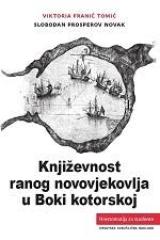
Književnost ranog novovjekovlja u Boki Kotorskoj: Hrestomatija za studente

Književnost ranog novovjekovlja u Boki Kotorskoj: Hrestomatija za studente

Viktoria Franić Tomić, Slobodan Prosperov Novak

This student handbook is the most comprehensive presentation to date of the literary heritage of the Bay of Kotor in the early modern period, from the late Renaissance to the Baroque, in which the authors offer a chronological and thematic overview of the

Hrvatska sveučilišna naklada, 2015.
Kroatisch. Latein Schrift. Taschenbuch.
18,34
O duhu otvorenosti: dimenzije misaonog nasleđa Radomira Konstantinovića

O duhu otvorenosti: dimenzije misaonog nasleđa Radomira Konstantinovića

The collection is an important contribution to the revitalization of Konstantinović's thought in the post-Yugoslav space, demonstrating that his critique of the rural mind remains relevant for understanding contemporary social and political pathologies.

Gradska biblioteka Subotica, 2016.
Serbisch. Latein Schrift. Taschenbuch.
7,32