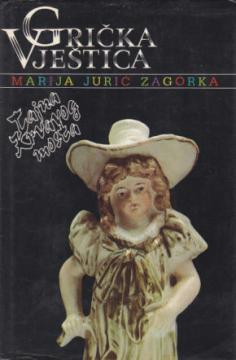
Grička vještica I: Tajna Krvavog mosta
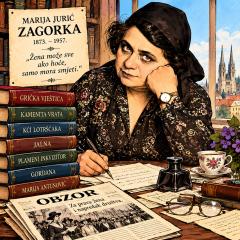
„Das Geheimnis der blutigen Brücke“ (1912) ist der erste Roman des berühmten Zyklus „Grička vještica“ (insgesamt sieben Bände). Erschienen 1912 in Fortsetzungen in der Zeitschrift „Mali novine“, wurde er sofort ein großer Erfolg und begründete die populär
Die Handlung spielt Ende des 18. Jahrhunderts (um 1775) in Zagreb (Oberstadt – Grič, Kaptol), Varaždin und Hrvatsko Zagorje, zur Zeit der österreichisch-ungarischen Herrschaft, aristokratischer Intrigen und sozialer Spannungen. Die Geschichte beginnt in einer dunklen, stürmischen Nacht, als der Müller Matijak, der Zimmermann Boltek und der Schmied Klement Gerüchte über einen Toten unter der Blutbrücke an einer Mühle an der Save hören. Dort finden sie die Leiche des ermordeten Adligen Mernay, durchbohrt mit einer venezianischen Nadel, in einen Mantel gehüllt, mit einer Pergamentkarte auf der Brust: „Du bist der Erste von neun, der bestraft wird, und deine acht Gefährten werden dir folgen.“ Die drei Kreuze symbolisieren Rache.
Im Zentrum stehen die jungen Helden: der Adlige Anzelmo, mutig und gerecht, und die schöne und tapfere Stanka (später die Schlüsselfigur des gesamten Zyklus). Sie begeben sich auf waghalsige Abenteuer – verborgene Tunnel unter Grič, Burgen, Klöster, unterirdische Gänge –, um die Verantwortlichen für eine Reihe mysteriöser Morde an Adligen aufzudecken. Hinter den Verbrechen verbergen sich eine Verschwörung, Rache für altes Unrecht, Korruption in den höchsten Kreisen und ein Interessenkonflikt.
Der Roman vereint Elemente eines historischen Romans, einer Liebesgeschichte, eines Kriminalromans und eines Schauerromans: dunkle Nächte, Stürme, Geister, geheime Räume, maskierte Mörder, verfolgte Helden. Zagorka beschreibt das Zagreb des 18. Jahrhunderts – die Blutbrücke, die Markuskirche, den Lotrščak-Turm, den Patačić-Palast, das Klara-Kloster – und erschafft so eine lebendige Atmosphäre des alten Grič.
Das Werk ist bekannt für seine starken weiblichen Charaktere (Stanka als Symbol für Mut und Unabhängigkeit), seine Kritik am Patriarchat und an sozialen Ungerechtigkeiten sowie seine spannende, wendungsreiche Handlung. Es gilt als Meisterwerk der kroatischen Volksliteratur und ist ideal für Liebhaber von Abenteuern in einem historischen Setting mit einem Hauch von Geheimnis und Romantik.
Im Angebot sind keine Exemplare vorhanden
Das letzte Exemplar wurde kürzlich verkauft.