Franjo Pavešić
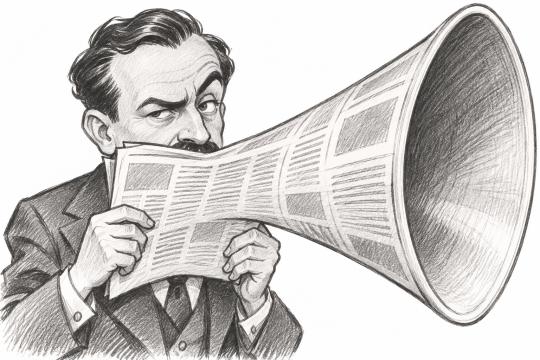
Franjo Pavešić (1907–1963) was a Croatian journalist, essayist and novelist. He attended school in Bakar and the Commercial Academy in Sušak before studying at the Free School of Political Science in Prague. He was a member of the Croatian Peasant Party. From 1939 to 1941 he published and edited Primorje, a weekly newspaper he founded in Sušak.
In Suvremeni žurnalizam i javno mišljenje, published by Matica hrvatska in Zagreb in 1936, he examined the role of the press in shaping public opinion. The two essays ask how newspapers’ selection and interpretation of news influence the way readers understand political and social events. In 1937 he published Podvoda, a novel of contemporary life, and in 1939 he published Duša i tijelo čakavštine in Sušak, a collection of polemical articles on the Chakavian dialect. These works show the range of his writing, from journalism and social issues to fiction and debate about language.
During the Second World War he served for a time as cultural attaché at the embassy of the Independent State of Croatia in Rome. He continued writing after the war, and his manuscripts on social and political subjects remained unpublished. He collected sources on the relationship between Italian irredentism and the Croats of Istria, including minutes of the Istrian Diet in Poreč from 1861 to 1865. He died in Zagreb in 1963.
Titles in our offer
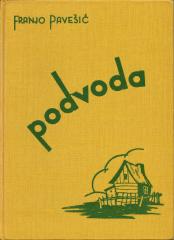
Podvoda: Roman iz savremenog života
Jure Parčić moves from the countryside to Zagreb, where he meets Cvijeta Orešič and discovers life in the impoverished suburb of Podvoda. A novel about love, social conflict and urban transformation.
Suvremeni žurnalizam i javno mišljenje
Two essays by Franjo Pavešić examining modern journalism, newspaper reporting and the formation of public opinion. A 1936 study of media influence, journalistic practice and the responsibilities of the press.
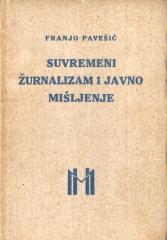
Suvremeni žurnalizam i javno mišljenje (dva eseja)
A collection of two essays dedicated to the role of journalism in shaping public opinion in the interwar period, published by Croatian journalist and publicist Franjo Pavešić.