Nicholas Patrick Wiseman
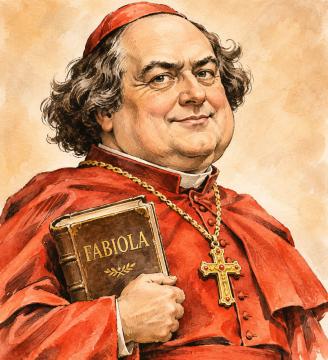
Nicholas Patrick Stephen Wiseman (Seville, 1802 – London, 1865) was an English Catholic cardinal, theologian, historian and writer, and a leading figure in the Catholic revival of Victorian England.
Born into a family of Irish descent, he was educated in England and Rome, where he developed a fascination with ancient languages, biblical manuscripts and early Christianity. His scholarly work Horae Syriacae (1828) established his international reputation as an expert in Syriac literature and biblical studies.
In 1850, Wiseman became the first Archbishop of Westminster following the restoration of the Catholic hierarchy in England, and was elevated to the rank of cardinal. His appointment provoked intense religious and political controversy in predominantly Protestant Britain.
His most celebrated literary achievement was Fabiola; or, The Church of the Catacombs (1854), a historical novel set in Rome during Diocletian's persecution of Christians. Its story of a young Roman noblewoman, Christian martyrs and underground religious communities became one of the most widely read Catholic historical novels of the nineteenth century, translated into numerous languages.
His other important works include Twelve Lectures on the Connexion Between Science and Revealed Religion (1836), Essays on Various Subjects (1853), Recollections of the Last Four Popes (1858) and the drama The Hidden Gem (1858).
Combining theology, history, literature and public debate, Wiseman helped reshape the position of Catholicism in British intellectual and cultural life. His novel Fabiola remains his most enduring literary legacy.
Titles in our offer
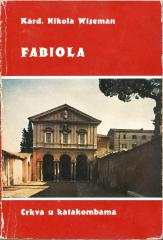
Fabiola – Crkva u katakombama
U Rimu cara Dioklecijana mlada plemkinja Fabiola upoznaje svet progonjenih hrišćana. Istorijski roman o veri, ljubavi, mučeništvu i preobražaju u senci rimskih katakombi.