Paul Bourget
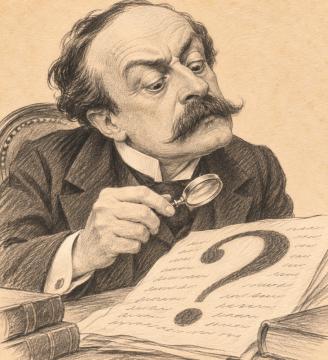
How far is a teacher responsible for what a pupil does with his ideas? In Le Disciple (The Disciple, 1889), Paul Bourget (1852–1935) turns that question into a plot. Influenced by the philosopher Adrien Sixte, the young Robert Greslou puts his theories of human behaviour to the test on a young woman. When the experiment ends in tragedy, even his teacher can no longer look dispassionately at the effects of the ideas he has championed.
Bourget was born in Amiens and died in Paris. He wrote poetry, literary criticism, novels and travel books. In 1894 he was elected to the Académie française. He made his name as a critic with Essais de psychologie contemporaine (1883), in which he wrote about Baudelaire, Flaubert and Taine, among others. He wanted to know what a writer’s style could reveal about the feelings and habits of an entire generation.
In Cruelle énigme (1885) and Mensonges (1887), Bourget focuses on intimate relationships and the reasons his characters give to justify their actions. Readers can often see how those explanations shift as soon as a new desire arises or a reputation comes under threat. In his later work, Bourget expressed his Catholic and conservative views more openly. In L’Étape (1902) he examines the consequences of rapid social advancement, while Le Démon de midi (1914) links a personal crisis with questions of faith.
Croatian editions of his work include Druga ljubav (1919), Učenik: Roman jednoga mladića (1920) and Nemeza (1932). These dates refer to the Croatian editions. In Le Disciple, watch for the moment when Greslou, convinced he understands other people’s motives, starts choosing explanations that allow him to overlook his own responsibility.
Titles in our offer
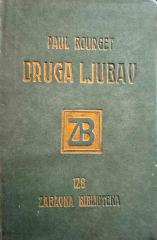
Druga ljubav
Can love begin again after a mistake? Paul Bourget’s Druga ljubav is a psychological novella about a woman whose past becomes an obstacle to renewed happiness, caught between feeling and conscience.
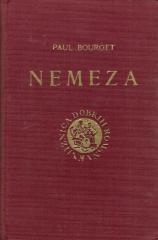
Nemeza
"Nemesis" is a dramatic story of a family torn apart by passion, hidden ambitions and moral decay. When the truth comes to the surface, punishment comes inexorably - from within, through their own mistakes.

Učenik: Roman jednoga mladića
Paul Bourget's novel The Disciple follows Gérard, a young man under the strong influence of an intellectual mentor who introduces him to moral relativism, which gradually leads him into a tragic conflict between ideals and reality.