Vicente Blasco Ibanez
For an old fisherman on the Albufera lagoon, water is what keeps him alive. His son sees land he could drain and turn into a rice field. In Cañas y barro (1902), published in English as Reeds and Mud, Vicente Blasco Ibáñez (1867–1928) follows three generations of one family. They quarrel over work and inheritance, and behind those disputes lies a question about how much say a father should have in the life his son will lead.
Blasco Ibáñez was born in Valencia, where he studied law and founded the newspaper El Pueblo in 1894. He was a journalist, novelist, travel writer and politician. He faced persecution and imprisonment for his republican activism and pursued the same cause as a member of the Spanish parliament. He died in Menton, in southern France.
His early novels La barraca (1898), Entre naranjos (1900) and Cañas y barro depict Valencia and the surrounding countryside through the work and everyday lives of the people who live there. Drawing on Émile Zola’s naturalism, he pays close attention to how ownership, poverty and pressure from neighbours shape individual choices. In La barraca, tensions rise when a new family takes over land whose history the neighbours remember all too well. In Cañas y barro, the dispute over how to make a living from the lagoon plays out within a family.
In The Cathedral (La catedral, 1903), he turns to social criticism. Blood and Sand (Sangre y arena, 1908) follows the rise of a bullfighter whose fame depends on a crowd that keeps demanding he take risks. He gained international popularity with The Four Horsemen of the Apocalypse (Los cuatro jinetes del Apocalipsis, 1916), in which the First World War divides branches of the same family. Both novels became well-known films. In the Valencian books, a quieter source of suspense is at work. It is enough to follow who works the land, who owns it and who depends on it.
Titles in our offer
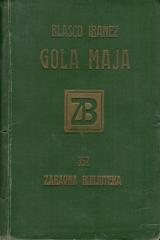
Gola maja
The famous painter Mariano Renovales, the son of a blacksmith, rises to fame in Rome, Paris and Madrid. Obsessed with his love for women and art, he paints his "Naked Maya", which leads to drama, jealousy and conflict.
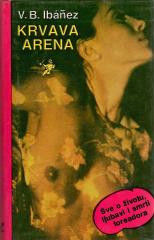
Krvava arena
The Bloody Arena (1908) is a naturalistic novel about the rise and fall of bullfighter Juan Gallardo. A poor young man becomes a famous matador, but is destroyed by love, vice, fear, and tragedies in the arena – a critique of Spanish bullfighting and soci
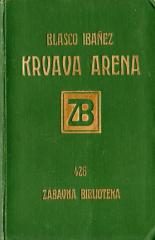
Krvava arena: roman iz života španjolskih torera
The Bloody Arena (1908) is a naturalistic novel about the rise and fall of bullfighter Juan Gallardo. A poor young man becomes a famous matador, but is destroyed by love, vice, fear, and tragedies in the arena – a critique of Spanish bullfighting and soci

Močvara
In the marshlands of Valencia, three generations of the Paloma fishing family struggle with poverty and change. Tonet and Neleta's forbidden love becomes a tragic tale of passion, greed and conflicting ambitions.