Joseph Kessel
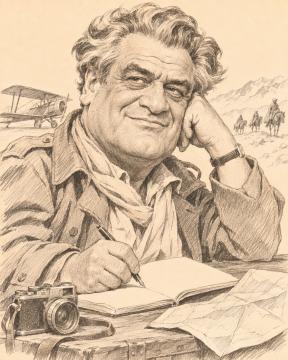
Joseph Kessel (Villa Clara, Argentina, 10 February 1898 – Avernes, France, 23 July 1979) was a French novelist, journalist and war correspondent whose work brought together literary storytelling and eyewitness reporting. Born into a Jewish family originating in the Russian Empire, he spent his childhood in Argentina, Russia and France. He studied in Nice and Paris, briefly pursued acting and entered journalism at seventeen. During the First World War, he volunteered for military service and served in French aviation.
Travel, conflict and encounters with people facing extraordinary circumstances supplied much of his material. Reporting across Europe, Africa, the Middle East and Asia, he explored political upheaval, marginal communities, slavery and human solidarity. Adventure in his writing becomes a test of character, revealing friendship, loyalty and the personal cost of freedom.
His debut collection, La Steppe rouge (1922), was followed by the successful aviation novel L’Équipage (1923). Important early works include Les Captifs (1926), Nuits de princes (1927), Belle de jour (1928) and La Passante du Sans-Souci (1936). His friendship with the pioneering aviator Jean Mermoz inspired the biography Mermoz (1938).
During the Second World War, Kessel joined the French Resistance and Free French forces. In 1943, he and his nephew Maurice Druon wrote the French lyrics of Le Chant des partisans, to music by Anna Marly. His Resistance novel L’Armée des ombres emerged from the same commitment.
Major later books include Le Tour du malheur (1950), Le Lion (1958), Les Mains du miracle (1960) and the Afghanistan-set Les Cavaliers (1967). Numerous works were adapted for the cinema. Elected to the Académie française in 1962, Kessel remains a distinctive literary witness to the twentieth century, attentive to courage, vulnerability and the contradictions of human behaviour.
Titles in our offer
Afera Bernan
Frenchman Pierre Roubier, after being tried in France for the murder of his wife, became a taxi driver in Lisbon.
Čovek od gipsa
The novel, whose original title is L'Homme de plâtre, explores complex human destinies through the story of a protagonist whose life symbolically reflects fragility and vulnerability, like plaster.


Ljepotica dana
Roman Lepota dana francuskog autora Žozefa Kesela, objavljen 1928. godine, istražuje složene psihološke i emocionalne slojeve glavne junakinje, Severin Serizi.

Ljubavnici sa Tahoa
Radnja se odvija u Lisabonu, pored reke Težo, i prati emotivnu i složenu ljubavnu priču isprepletenu dramskim elementima.
Posada
Roman se smatra jednim od Keselovih najznačajnijih dela, inspirisan njegovim iskustvima kao pilota tokom Prvog svetskog rata.
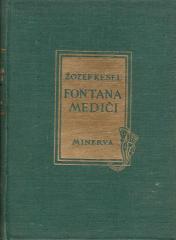
Putevi nesreće I: Fontana Mediči
Pariz uoči i tokom Prvog svetskog rata. Mladi Rišar Dalo, pun ambicije i želje za životom, kreće na putovanje uspeha, ljubavi i moralnih iskušenja koja će ga odvesti u vrtlog nesreće.
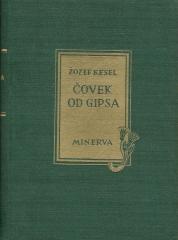
Putevi nesreće IV: Čovek od gipsa
Završni deo tetralogije „Putevi nesreće“. Rišar Dalo, slomljen gubicima, drogom i unutrašnjim sukobima, suočava se sa posledicama svog burnog života i traži spas u očaju i kajanju.
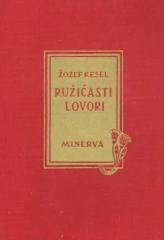
Ružičasti lovori
Drugi deo autorske opsežne sage *Nisu svi ljudi jednaki*, u kojoj se kroz intimne drame i društvena previranja istražuju strasti, ljudske slabosti i neumoljive životne sudbine.
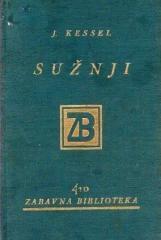
Sužnji
Knjiga bolesti, straha i utehe